Related Articles

Three-dimensional CT angiography of the canine hepatic vasculature.

J Vet Sci. 2008 Dec;9(4):409-15

Authors: Jeong Y, Lim C, Oh S, Jung J, Chang J, Yoon J, Choi M

Eight Beagle dogs were anesthetized and were imaged using a single channel helical CT scanner. The contrast medium used in this study was iohexol (300 mg I/ml) and doses were 0.5 ml/kg for a cine scan, 3 ml/kg for an enhanced scan. The flow rate for contrast material administration was 2 ml/sec for all scans. This study was divided into three steps, with unenhanced, cine and enhanced scans. The enhanced scan was subdivided into the arterial phase and the venous phase. All of the enhanced scans were reconstructed in 1 mm intervals and the scans were interpreted by the use of reformatted images, a cross sectional histogram, maximum intensity projection and shaded surface display. For the cine scans, optimal times were a 9-sec delay time post IV injection in the arterial phase, and an 18-sec delay time post IV injection in the venous phase. A nine-sec delay time was acceptable for the imaging of the canine hepatic arteries by CT angiography. After completion of arterial phase scanning, venous structures of the liver were well visualized as seen on the venous phase.

PMID: 19043317 [PubMed - in process]

Related Articles

Evaluation of partial cranial cruciate ligament rupture with positive contrast computed tomographic arthrography in dogs.

J Vet Sci. 2008 Dec;9(4):397-402

Authors: Han S, Cheon H, Cho H, Kim J, Kang JH, Yang MP, Lee Y, Lee H, Chang D

Computed tomographic arthrography (CTA) of four cadaveric canine stifles was performed before and after partial cranial cruciate ligament rupture in order to verify the usefulness of CTA examination for the diagnosis of partial cranial cruciate ligament rupture. To obtain the sequential true transverse image of a cranial cruciate ligament, the computed tomography gantry was angled such that the scanning plane was parallel to the fibula. True transverse images of cranial cruciate ligaments were identified on every sequential image, beginning just proximal to the origin of the cranial cruciate ligament distal to the tibial attachment, after the administration of iodinated contrast medium. A significant decrease in the area of the cranial cruciate ligament was identified on CTA imaging after partial surgical rupture of the cranial cruciate ligament. This finding implies that CTA can be used for assessing partial cranial cruciate ligament ruptures in dogs.

PMID: 19043315 [PubMed - in process]

Related Articles

Avulsion of the left renal artery following blunt abdominal trauma in a dog.

J Small Anim Pract. 2008 Nov 13;

Authors: Millward IR

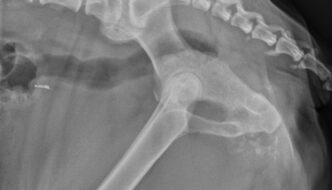
A two-year-old, male, crossbreed dog was presented three days after being involved in a motor vehicle accident. Survey radiographs showed multiple pelvic fractures and poor intraperitoneal and retroperitoneal contrast. Ultrasound indicated the left kidney to be hypoperfused, and a thrombus was visible at the origin of the left renal artery. Ultrasound-guided fine needle aspiration confirmed that free fluid visible in the retroperitoneal and peritoneal spaces was blood. No improvement was seen in the renal perfusion over a 43 hour period, and the intestinal hypomotility worsened over this time. The haemoperitoneum and the haemoretroperitoneum both resolved ultrasonographically within this 43 hour period. Surgery confirmed an avulsion of the left renal artery approximately 10 mm from its origin on the aorta and an avulsion of the left ureter at the ureteropelvic junction. An ureteronephrectomy was performed on the left kidney and the dog recovered uneventfully.

PMID: 19037893 [PubMed - as supplied by publisher]