This week’s imaging case comes from large animal radiology. It’s a 2-year-old Thoroughbred filly that was kicked on the left tarsus. Post your interpretations in the comments section!
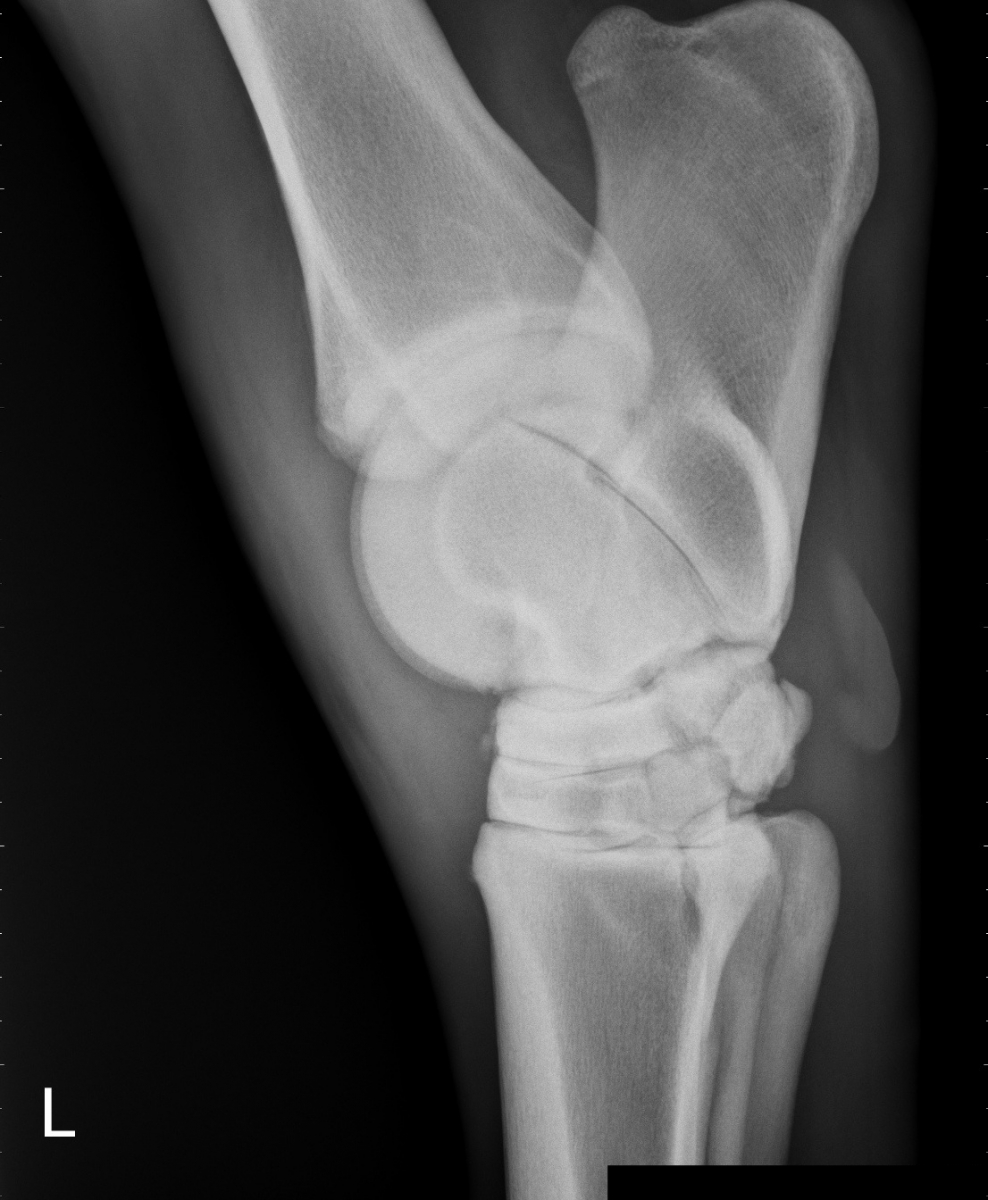
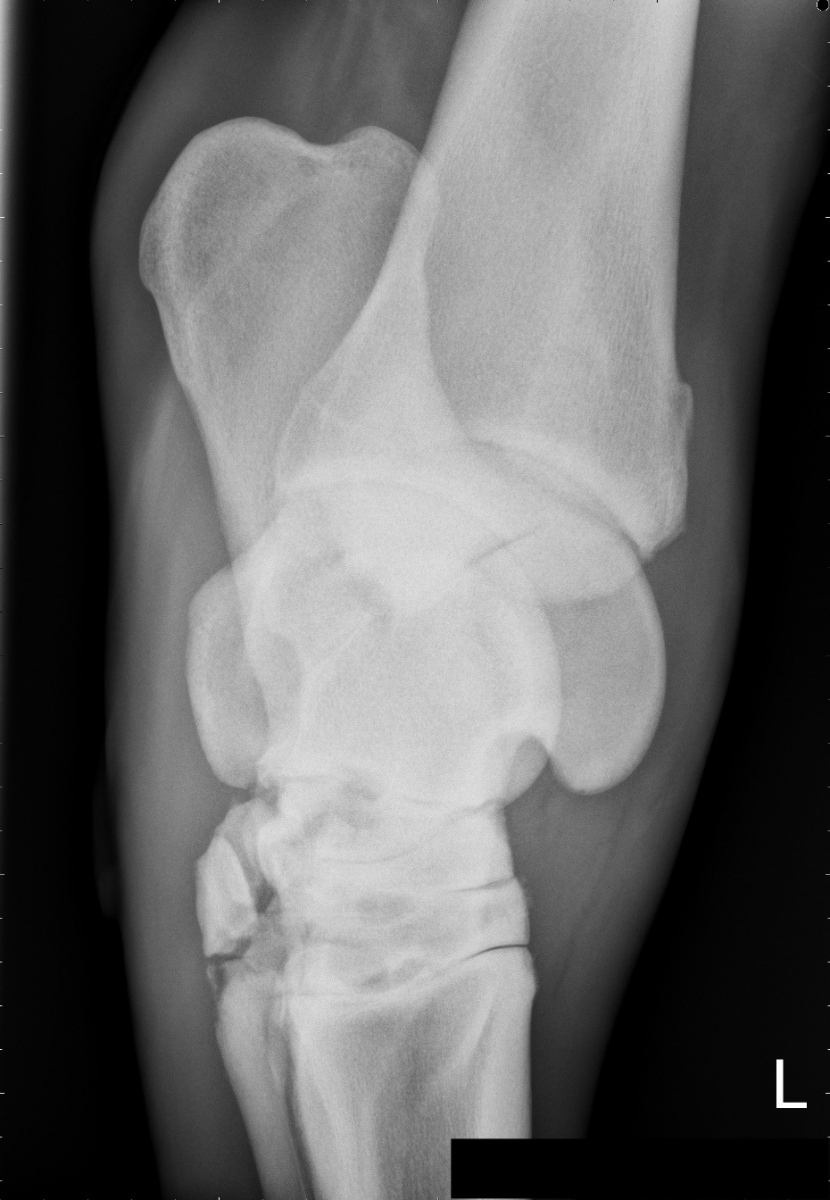
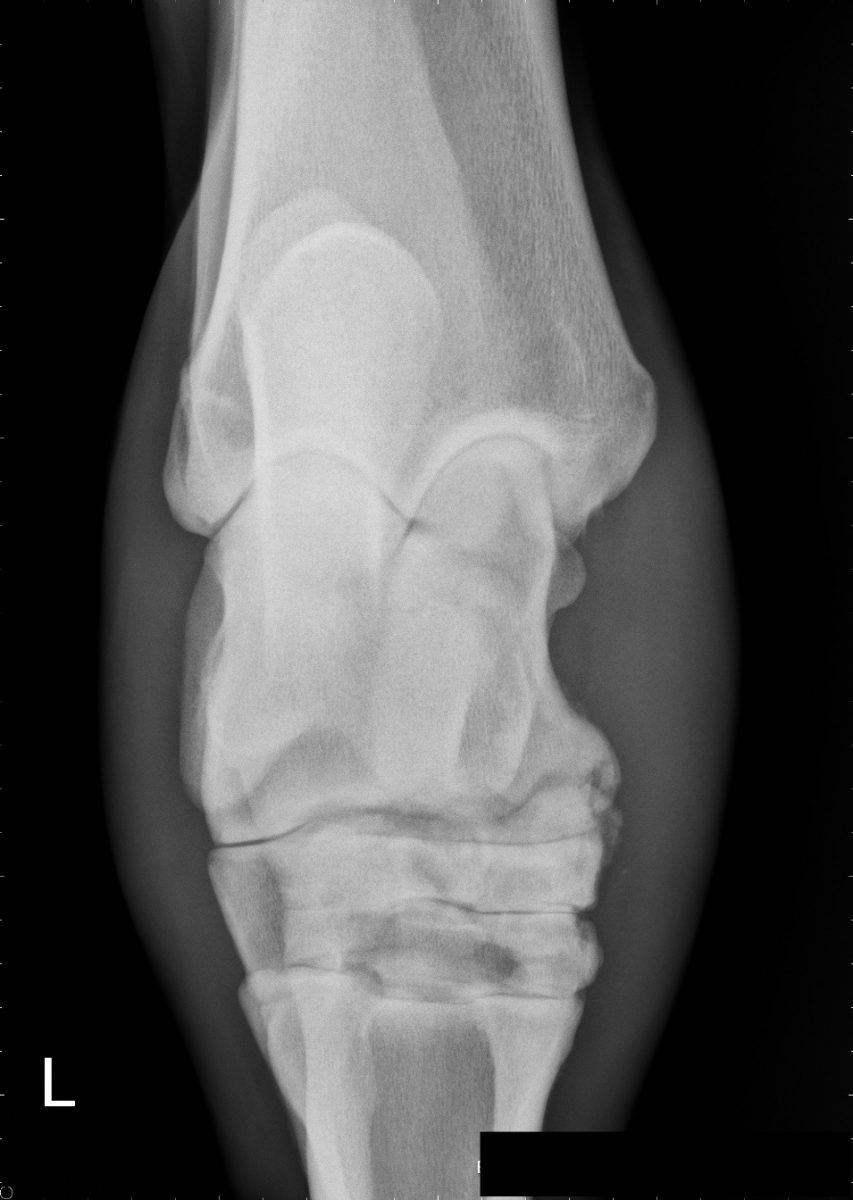
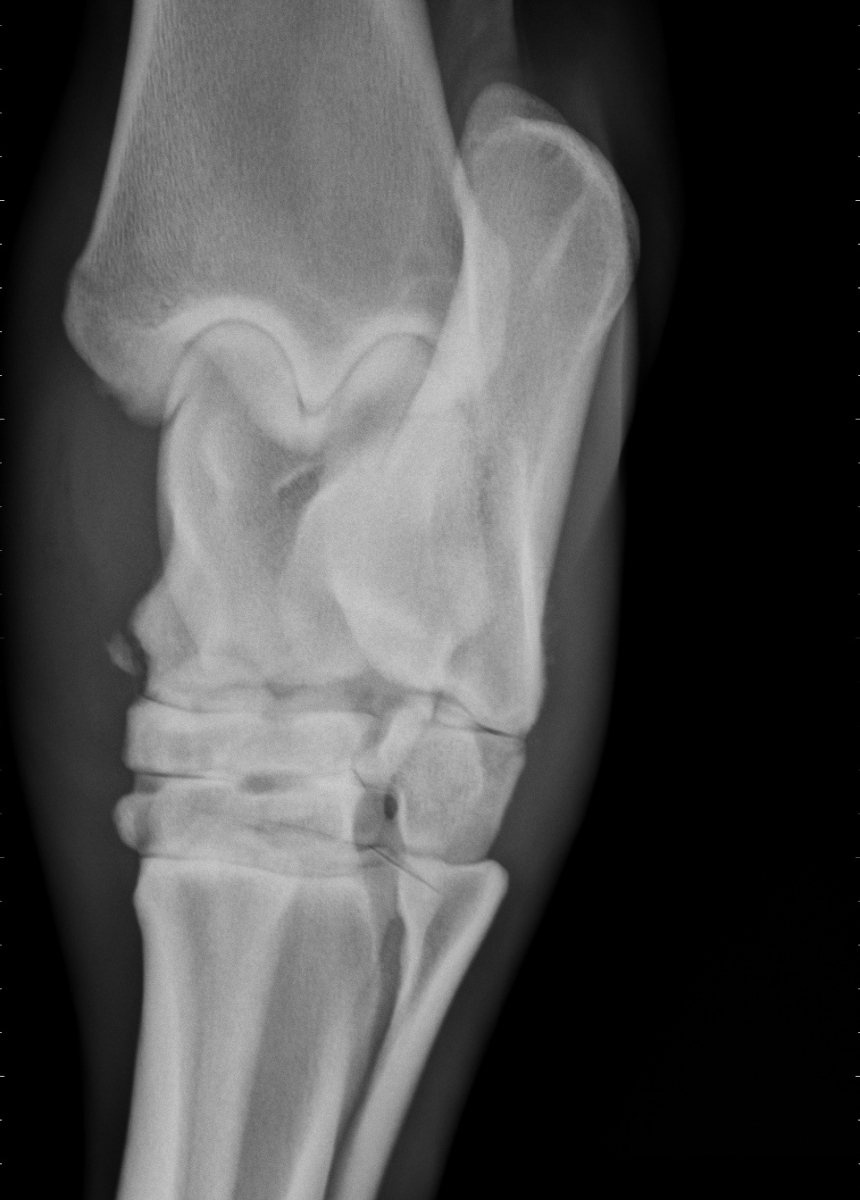
Findings
Radiographs – There is marked intracapsular soft tissue swelling of the tarsocrural joint. There is a large osseous fragment at the distal tuberosity of the talus. In addition, there is periosteal new bone production at the distal aspect of the medial malleolus. There is a bone fragment at the head of MC2. Fused tarsal bone I and II has increased joint space from the third tarsal bone and is fractured. There is periarticular new bone production of the dorsal aspect of the central and third tarsal bones.
Due to the complexity of the tarsal joint, CT was performed for prognostic information and possible surgical planning.
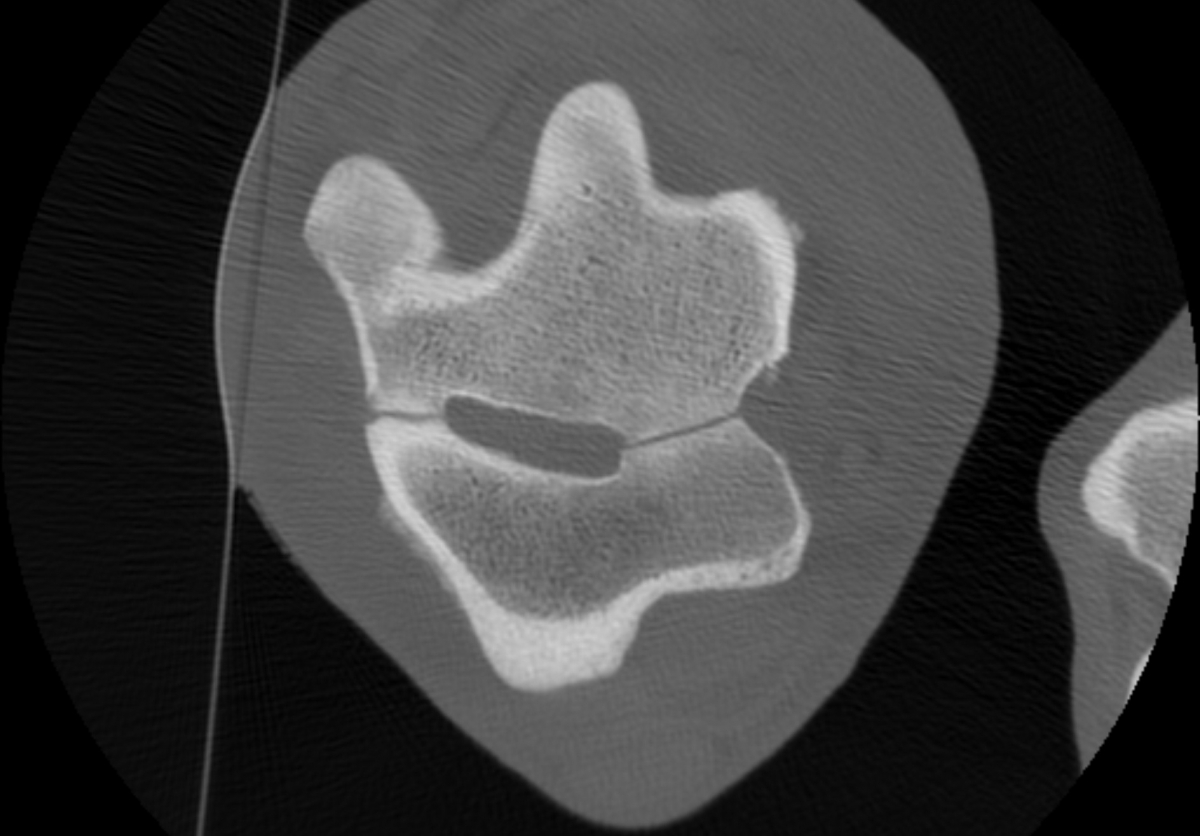
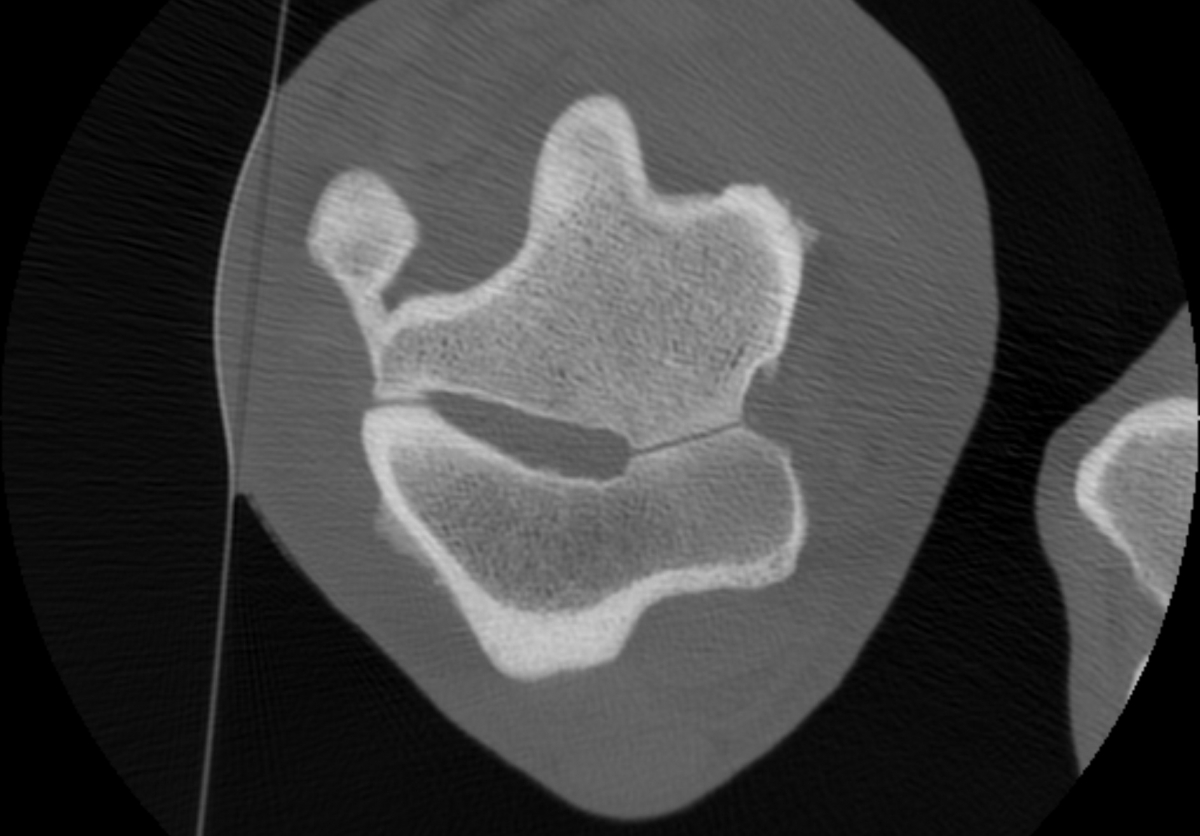
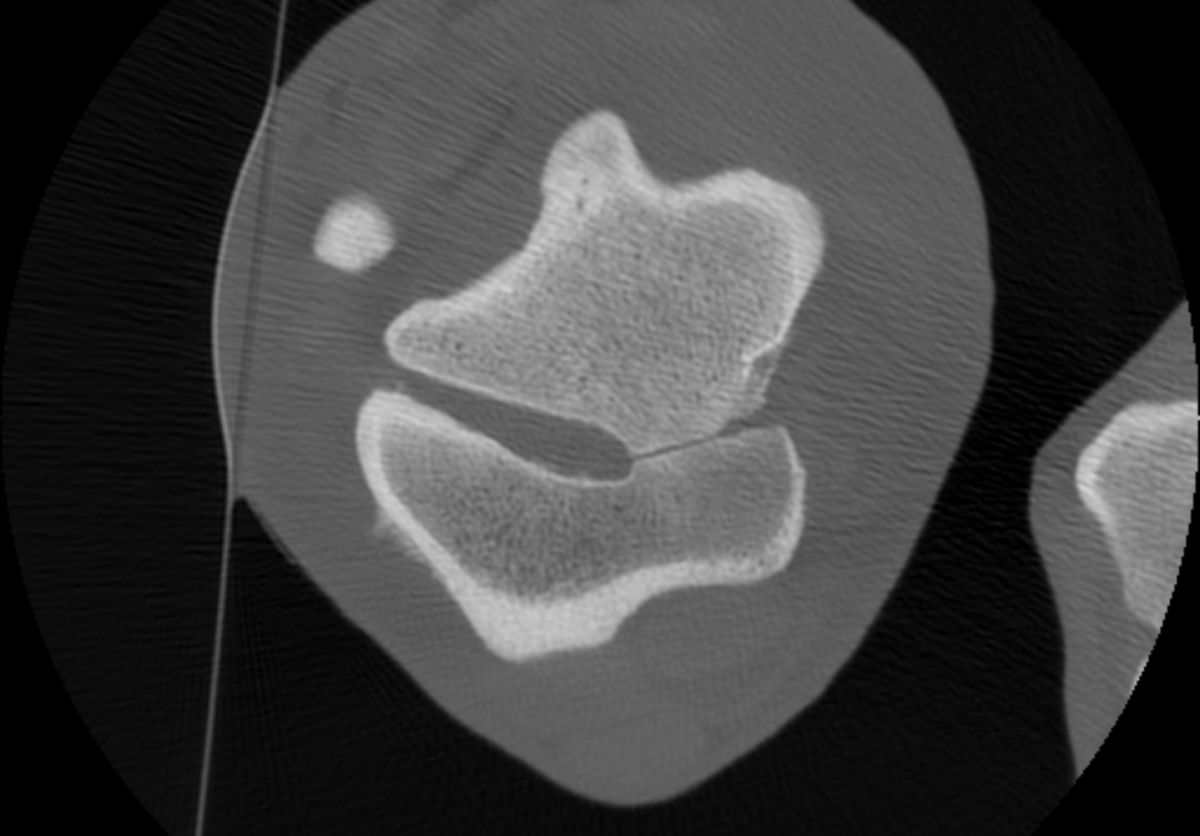
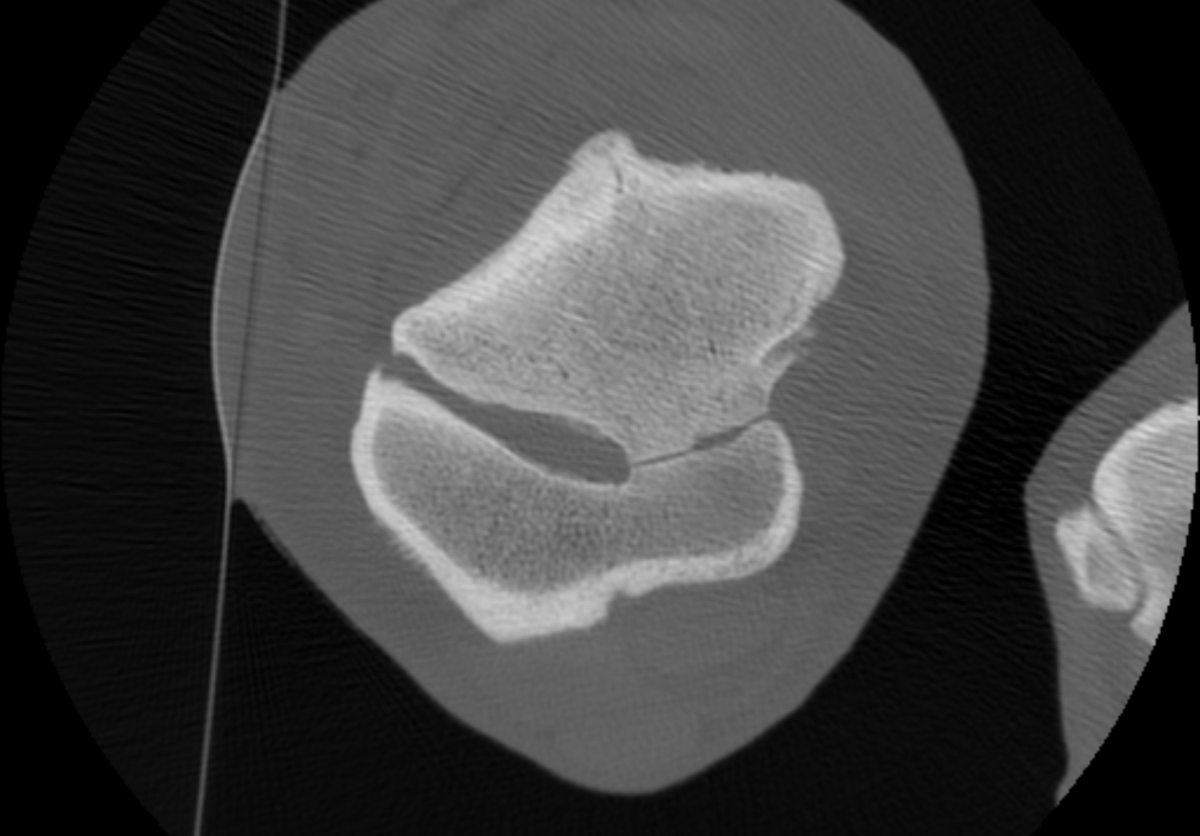
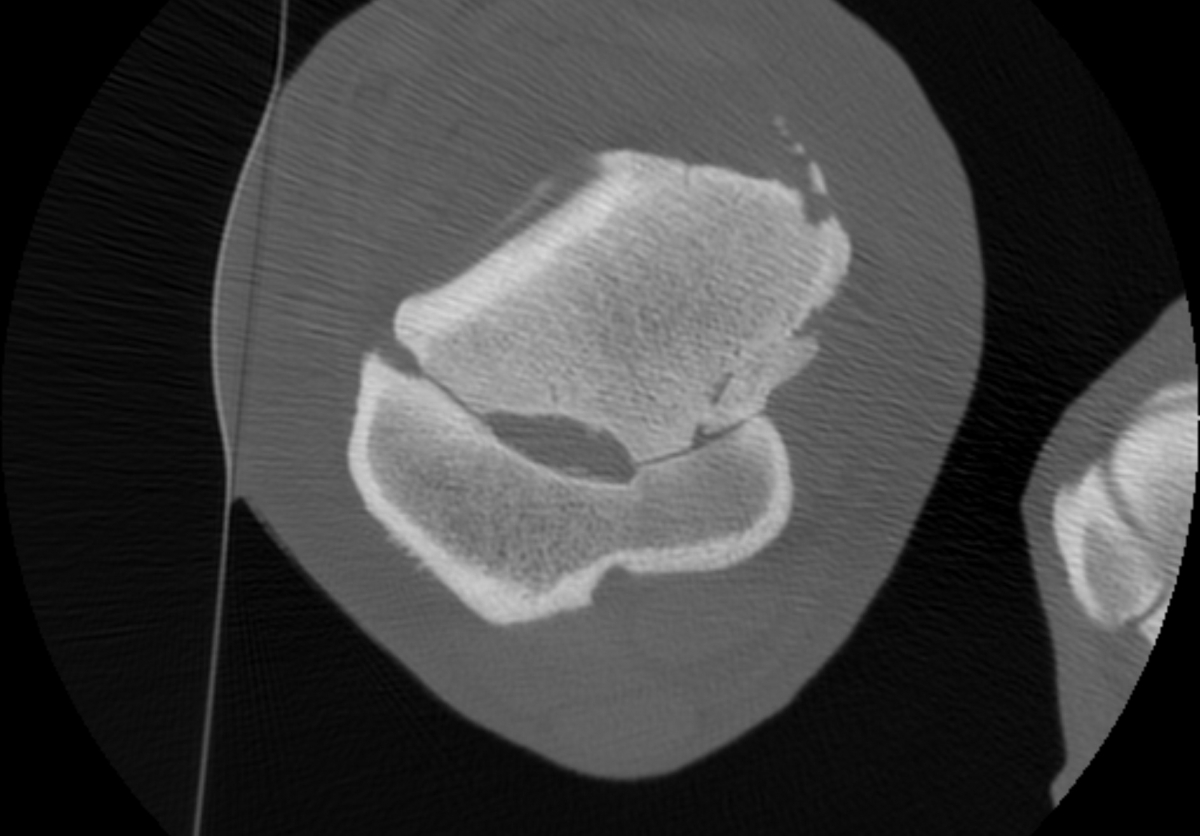
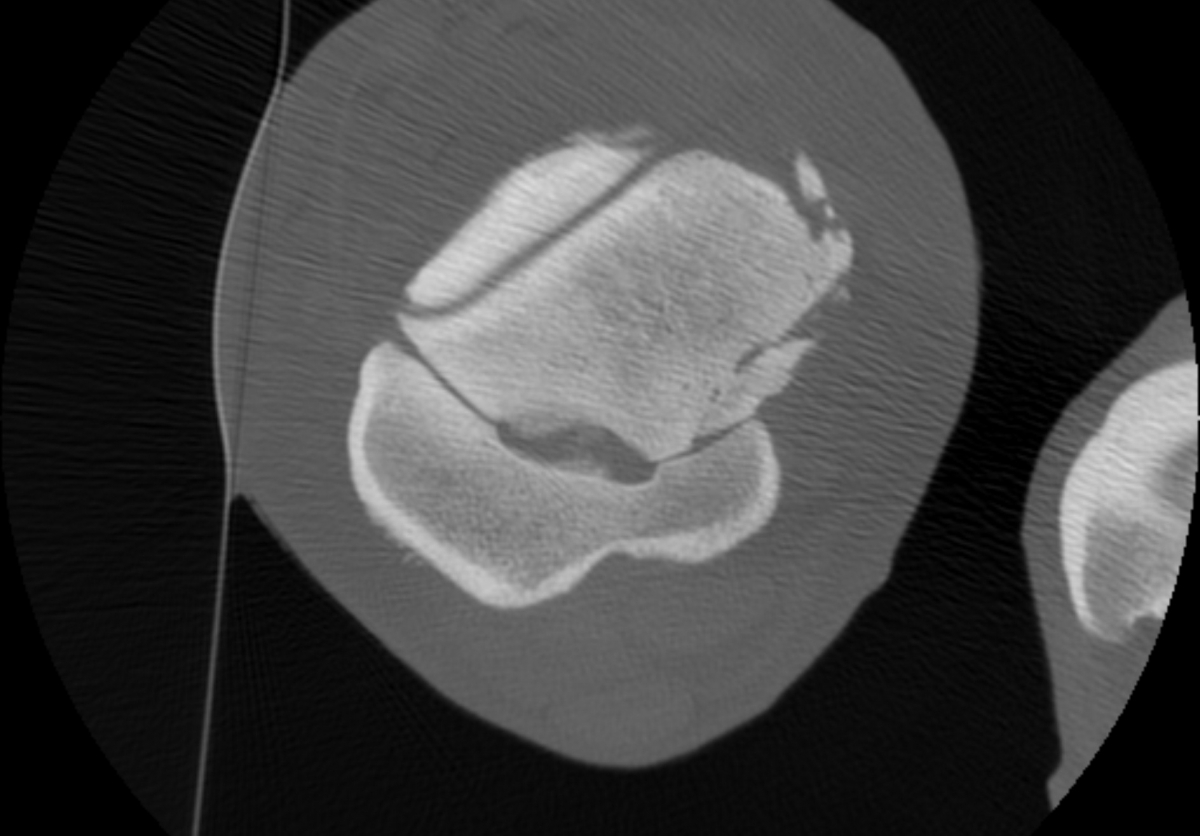
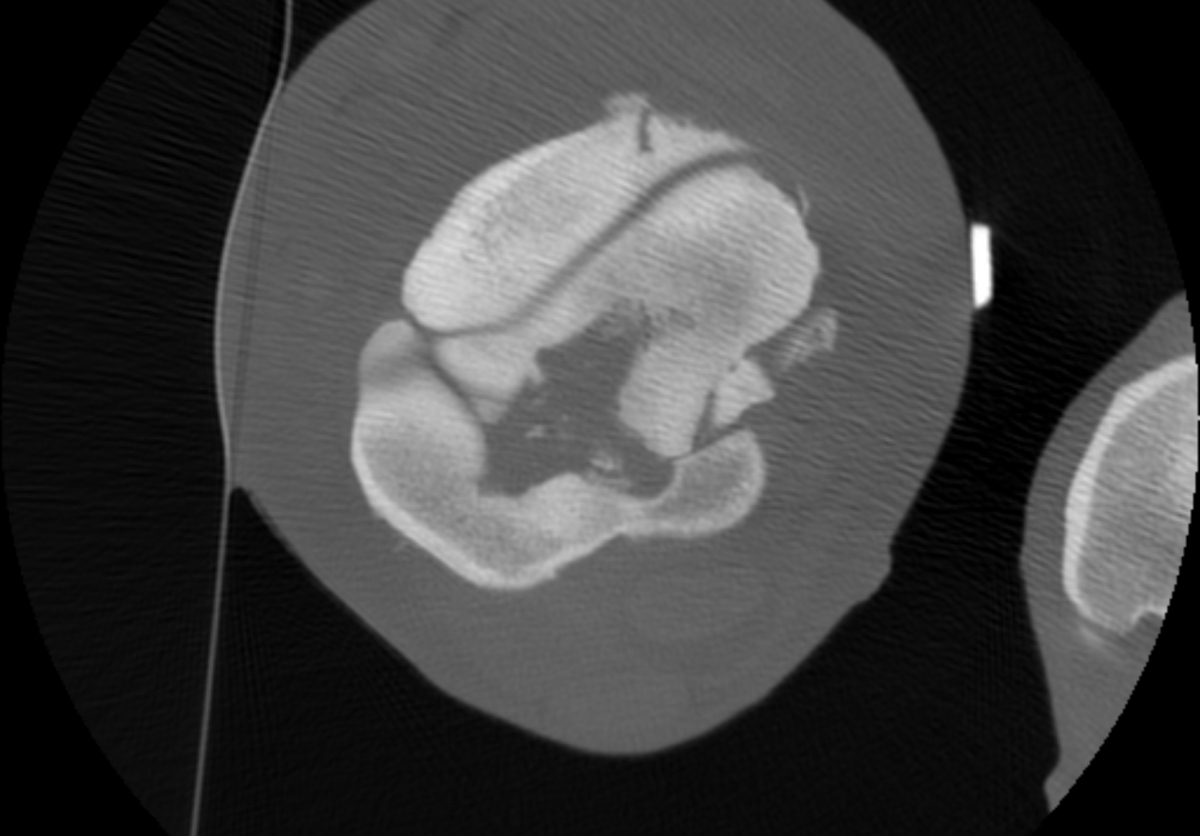
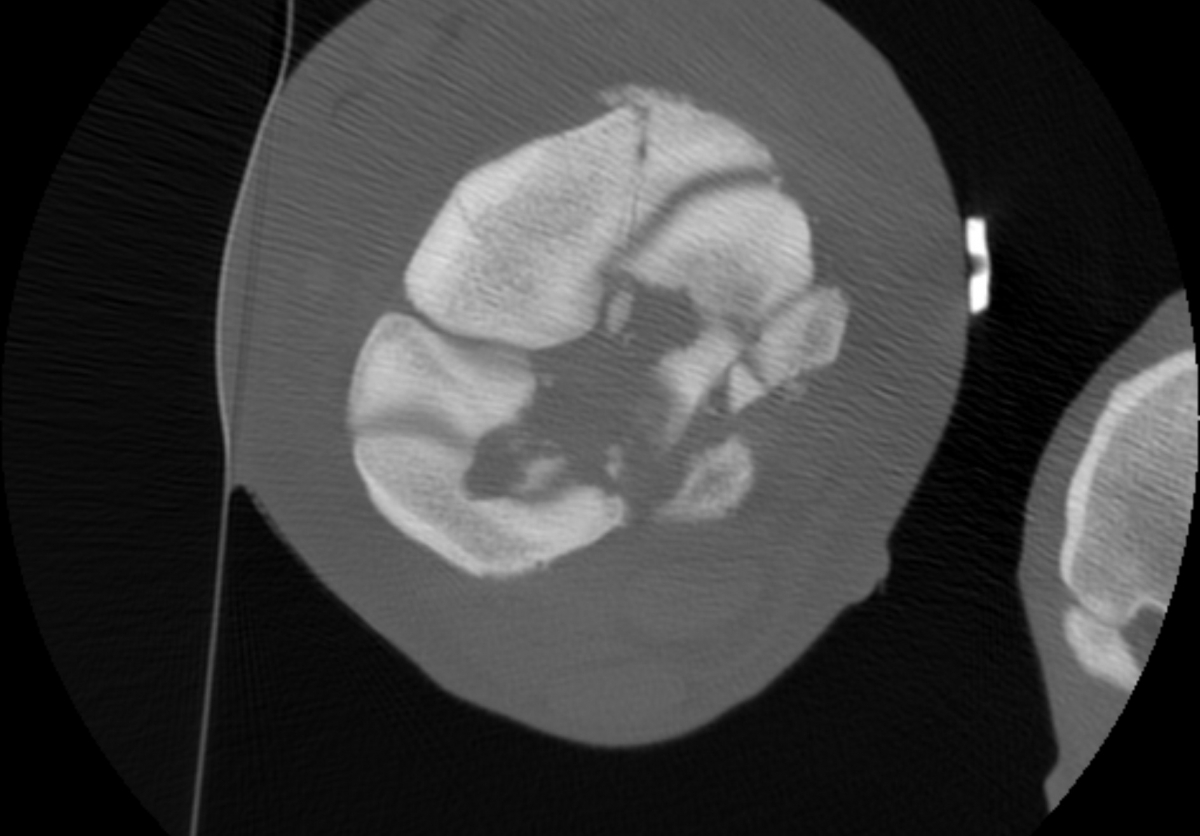
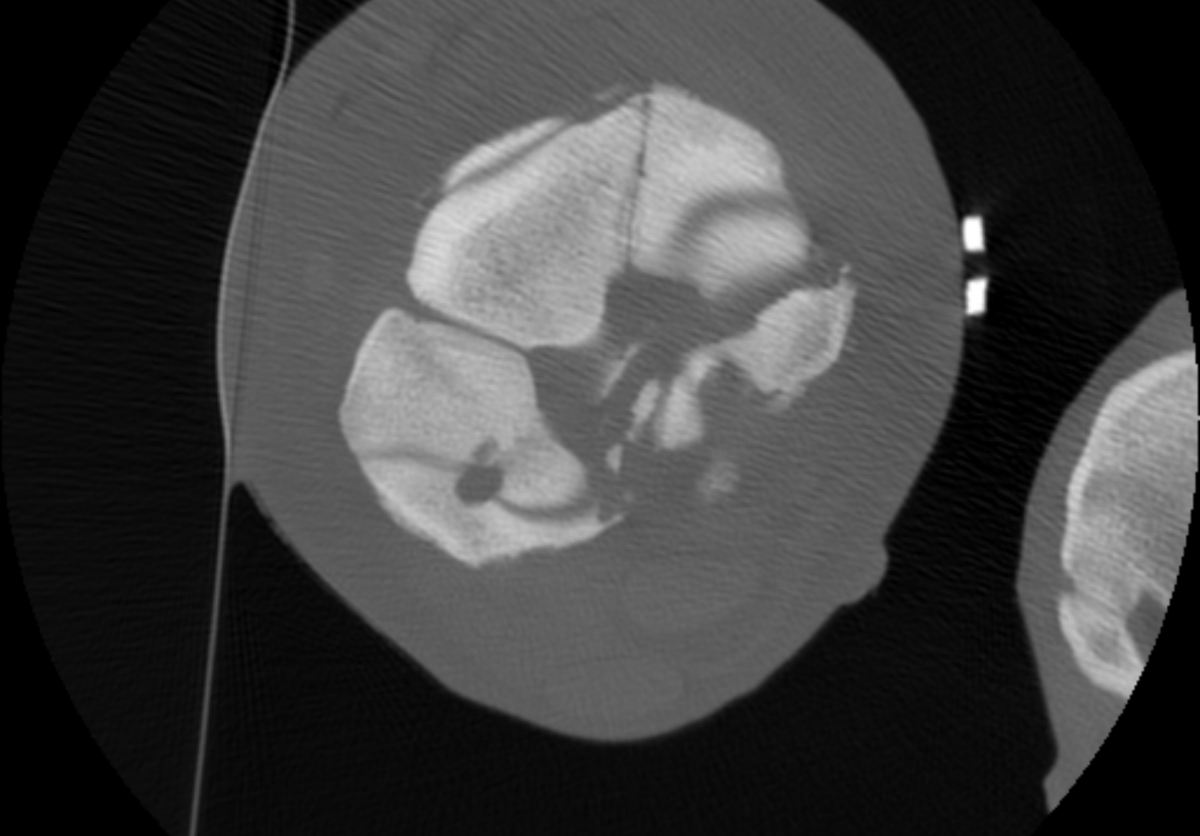
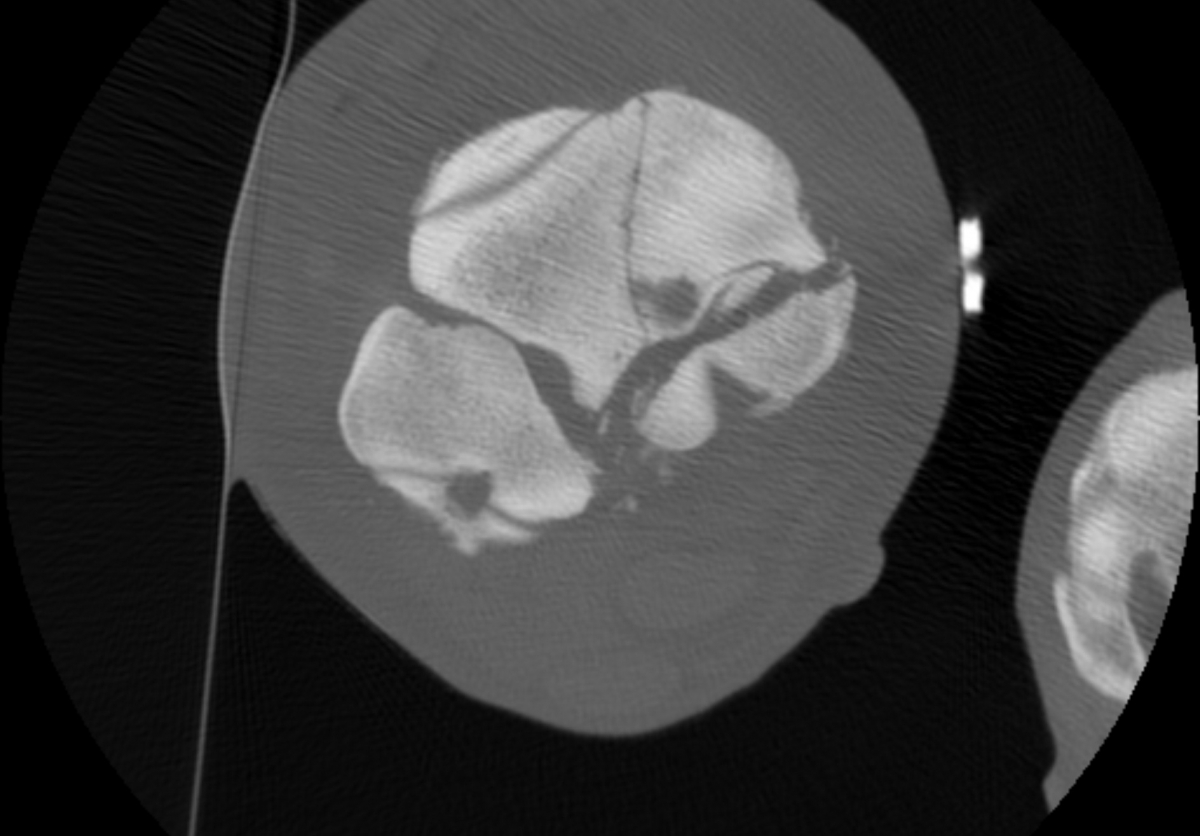
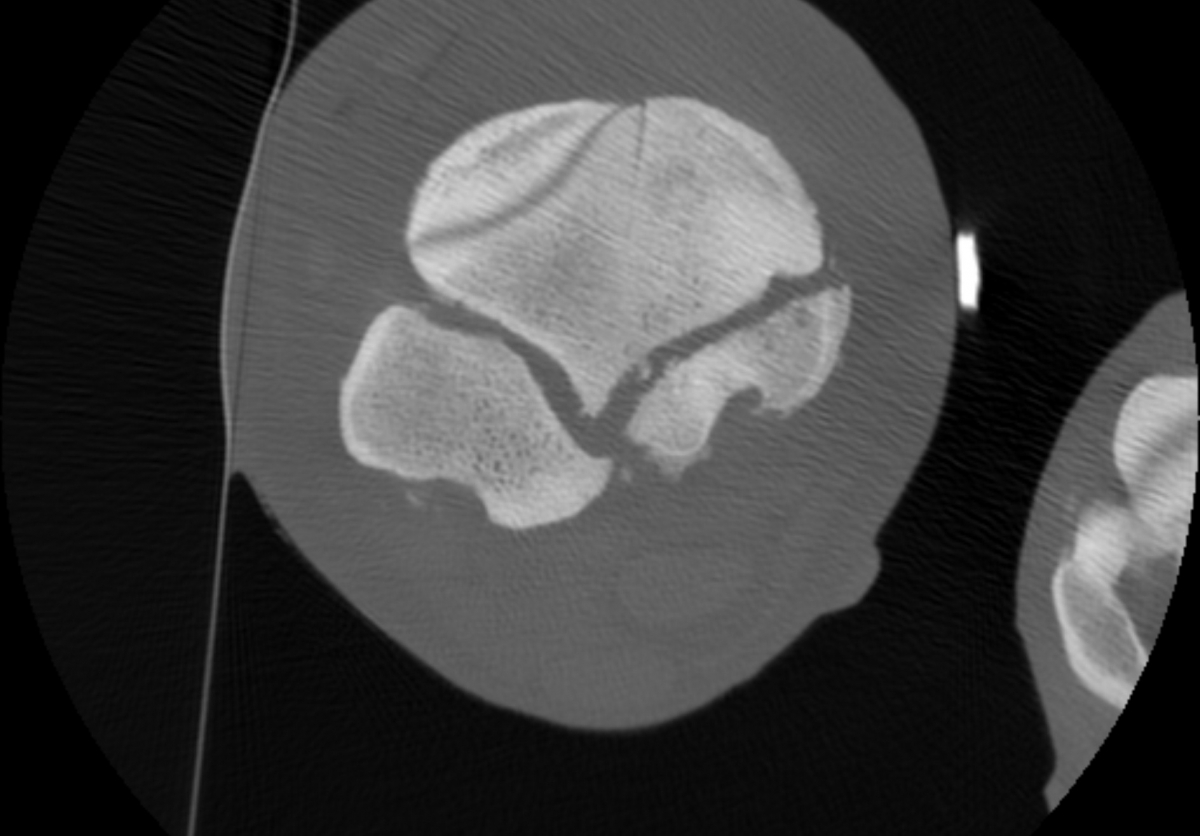
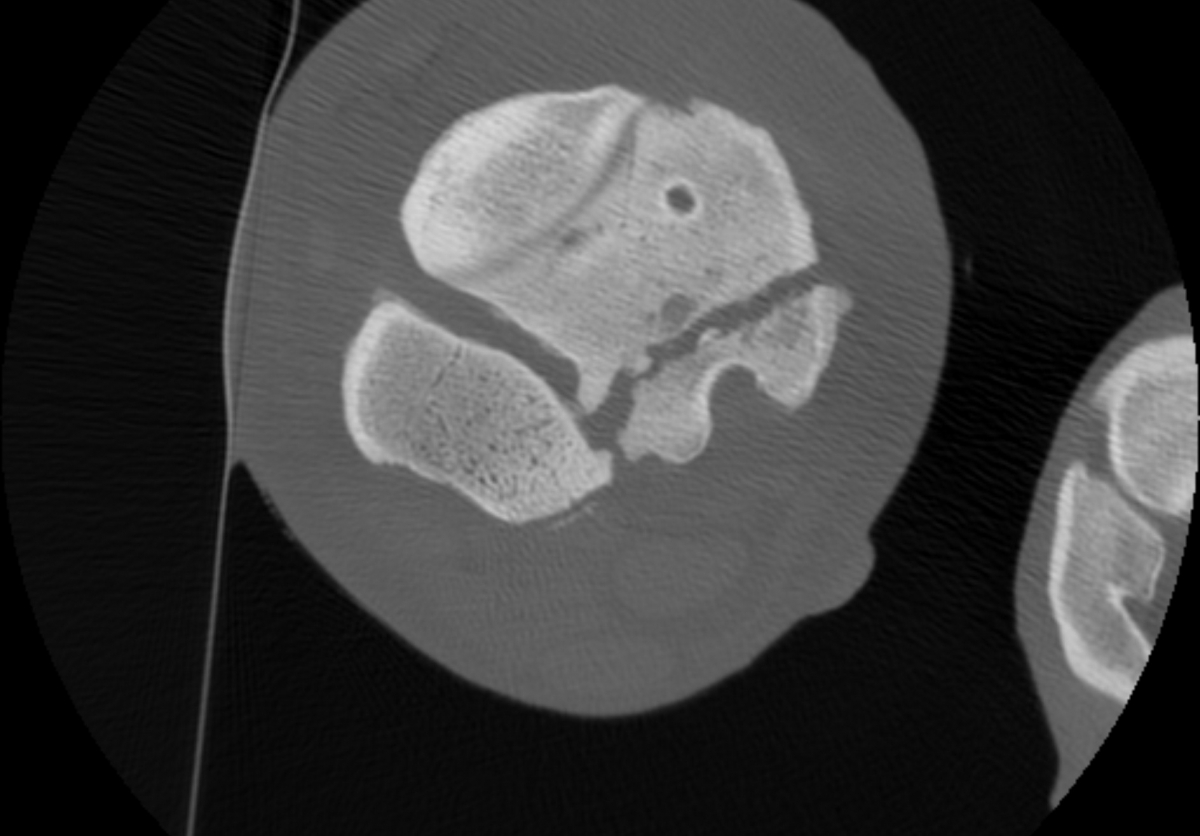
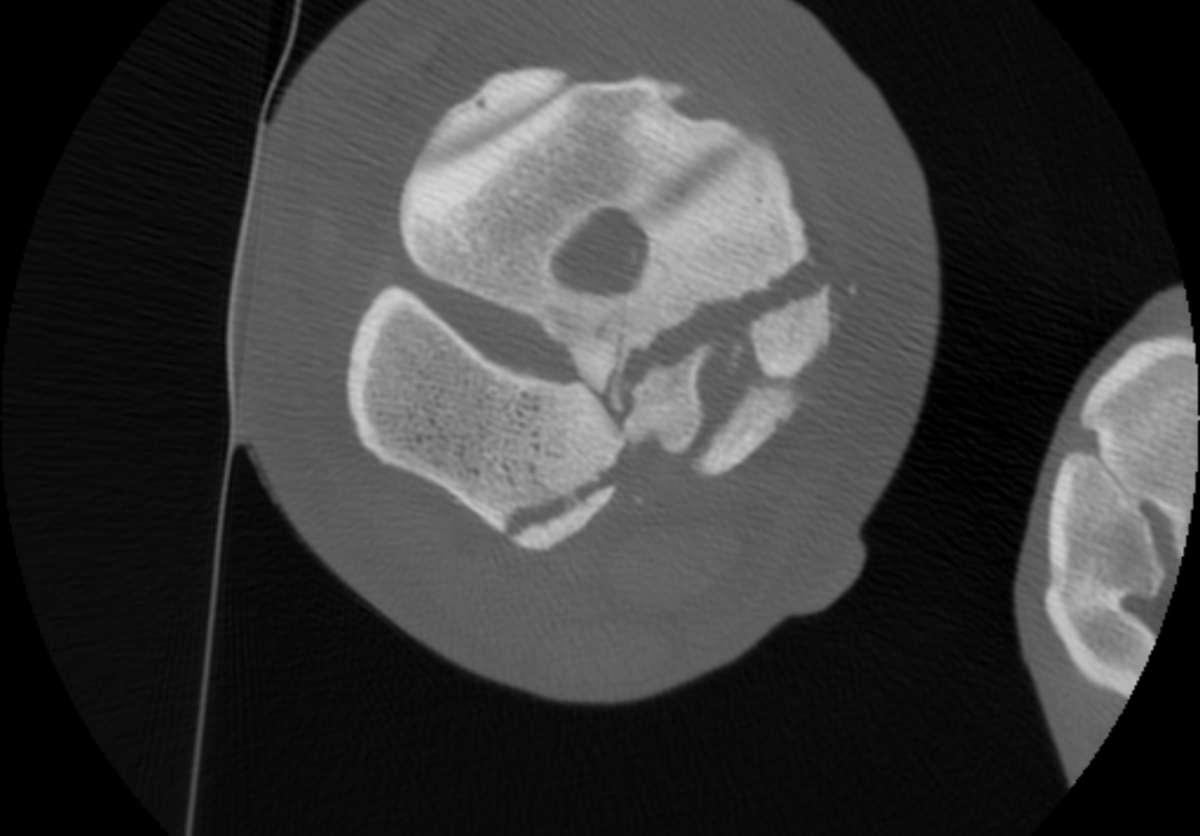
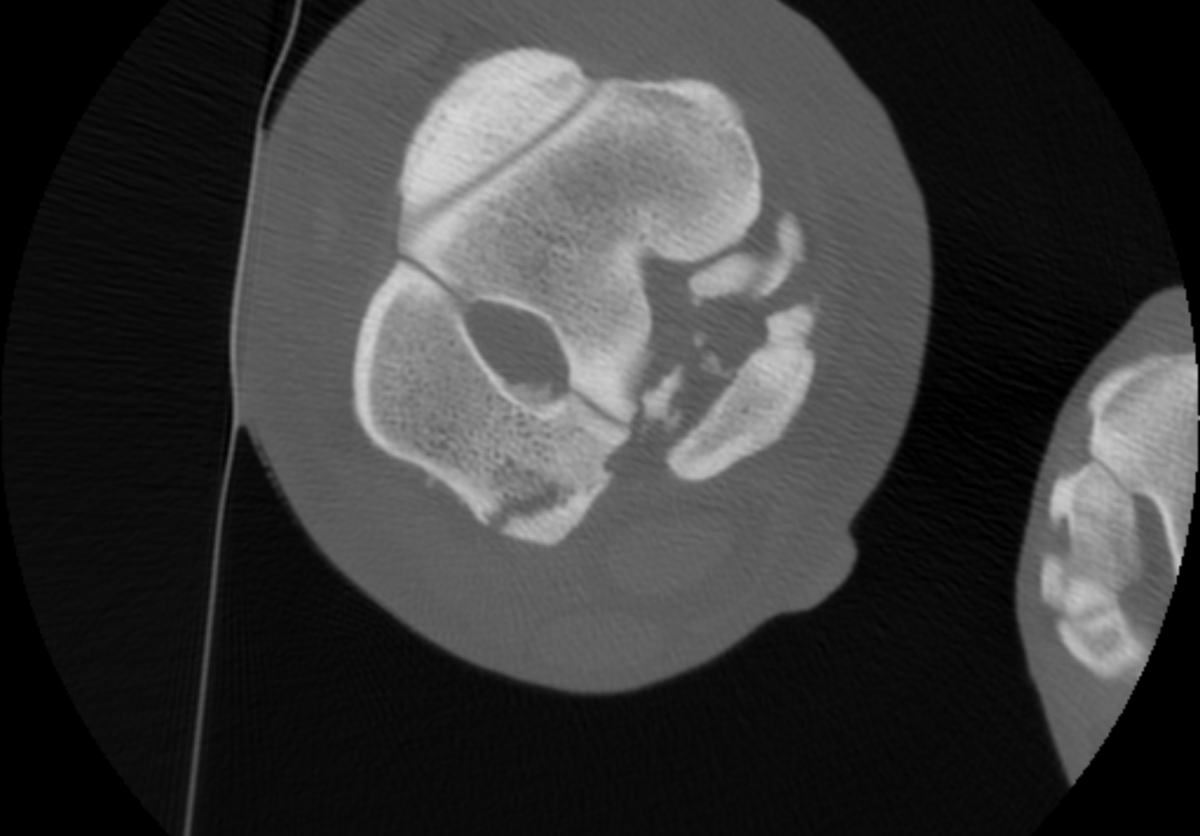
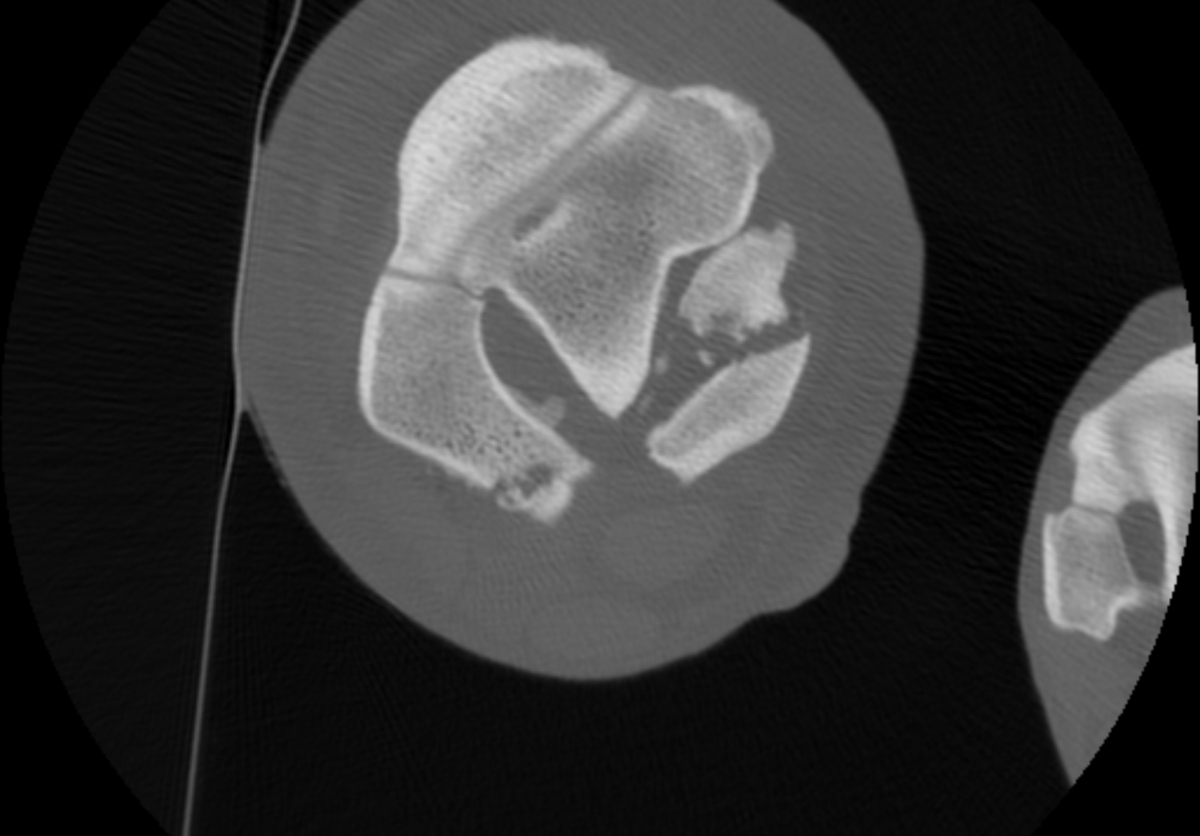
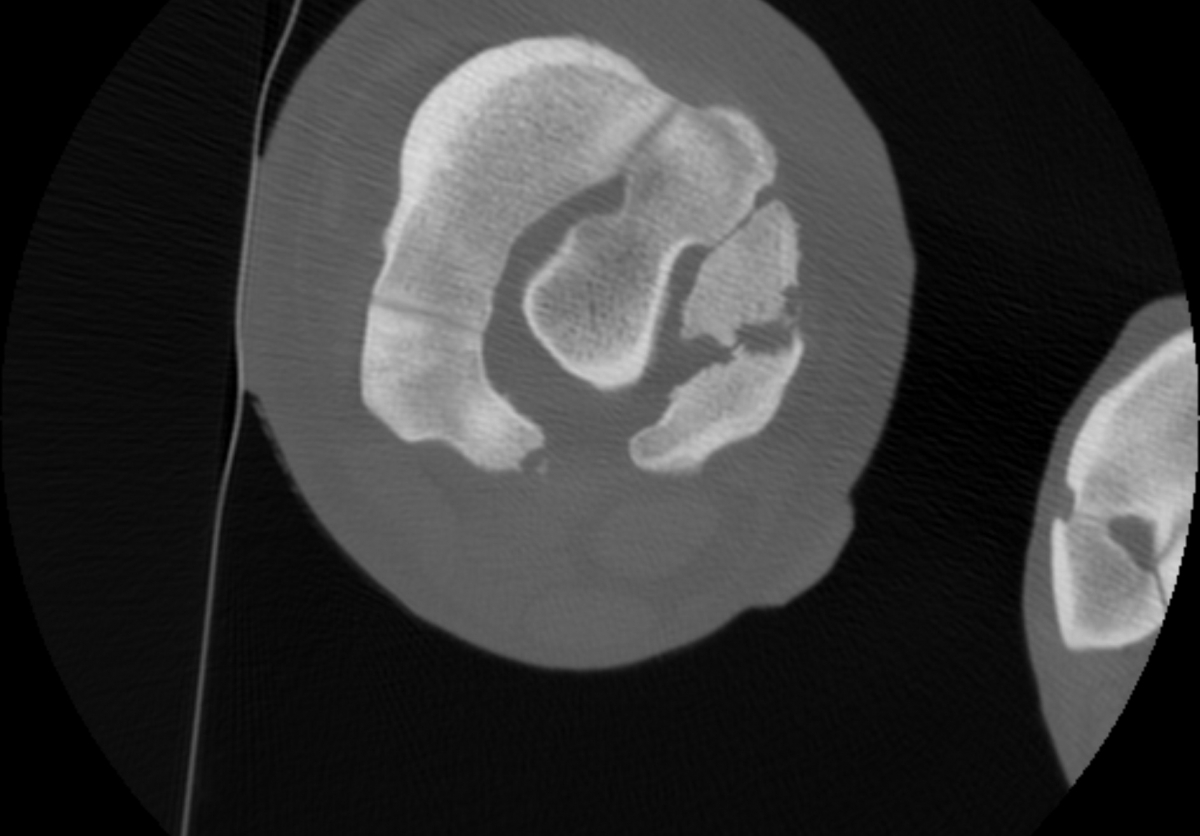
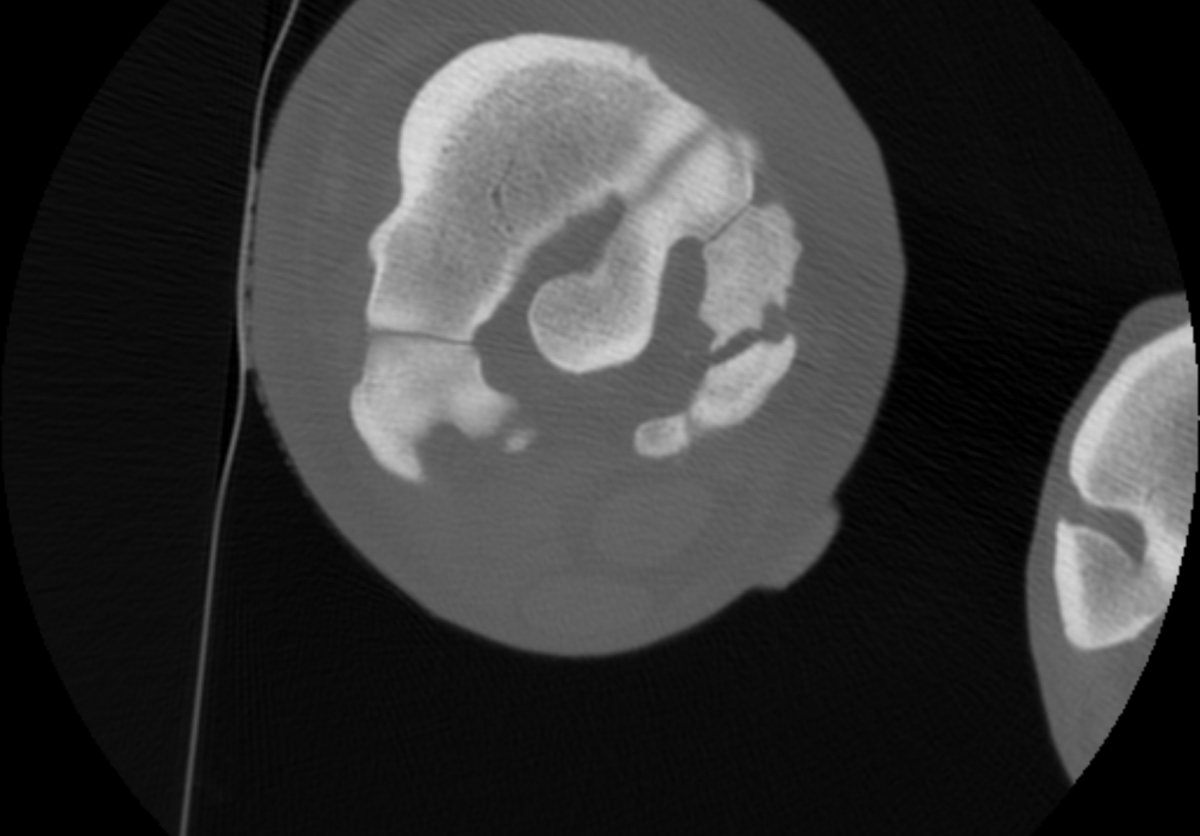
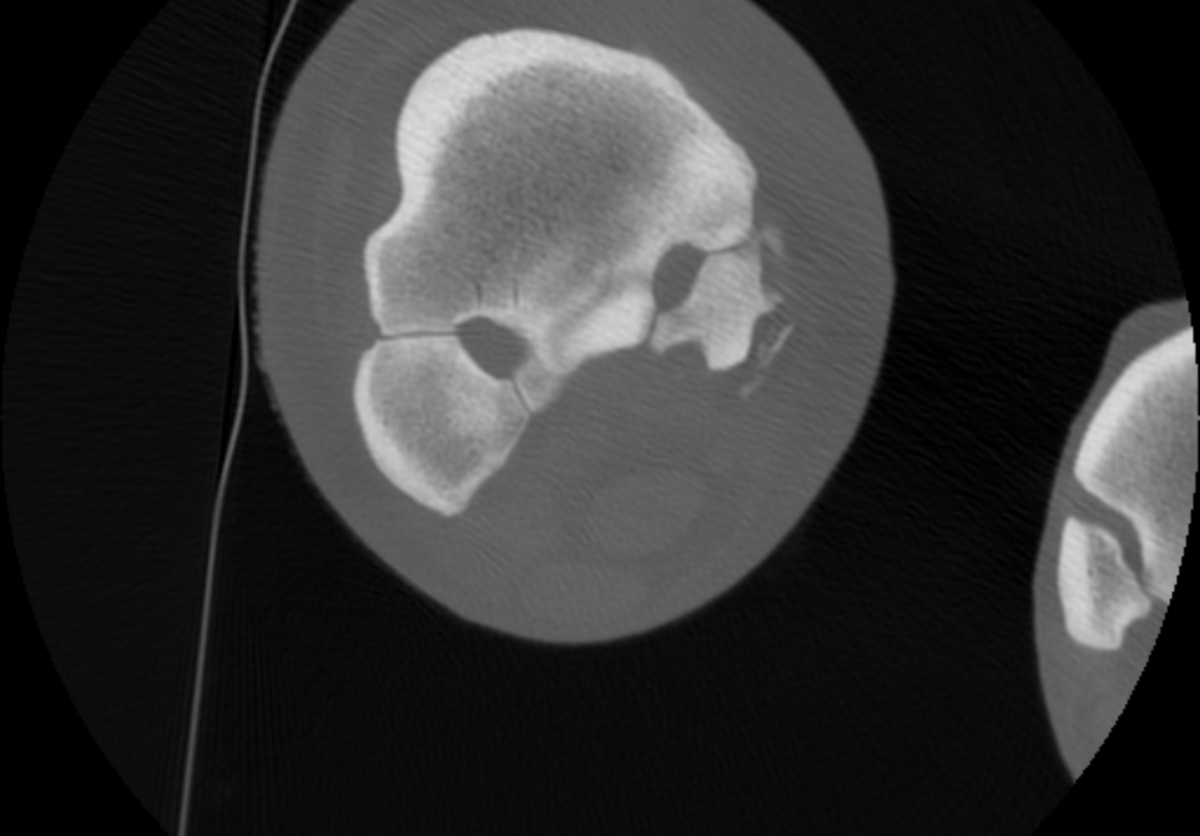
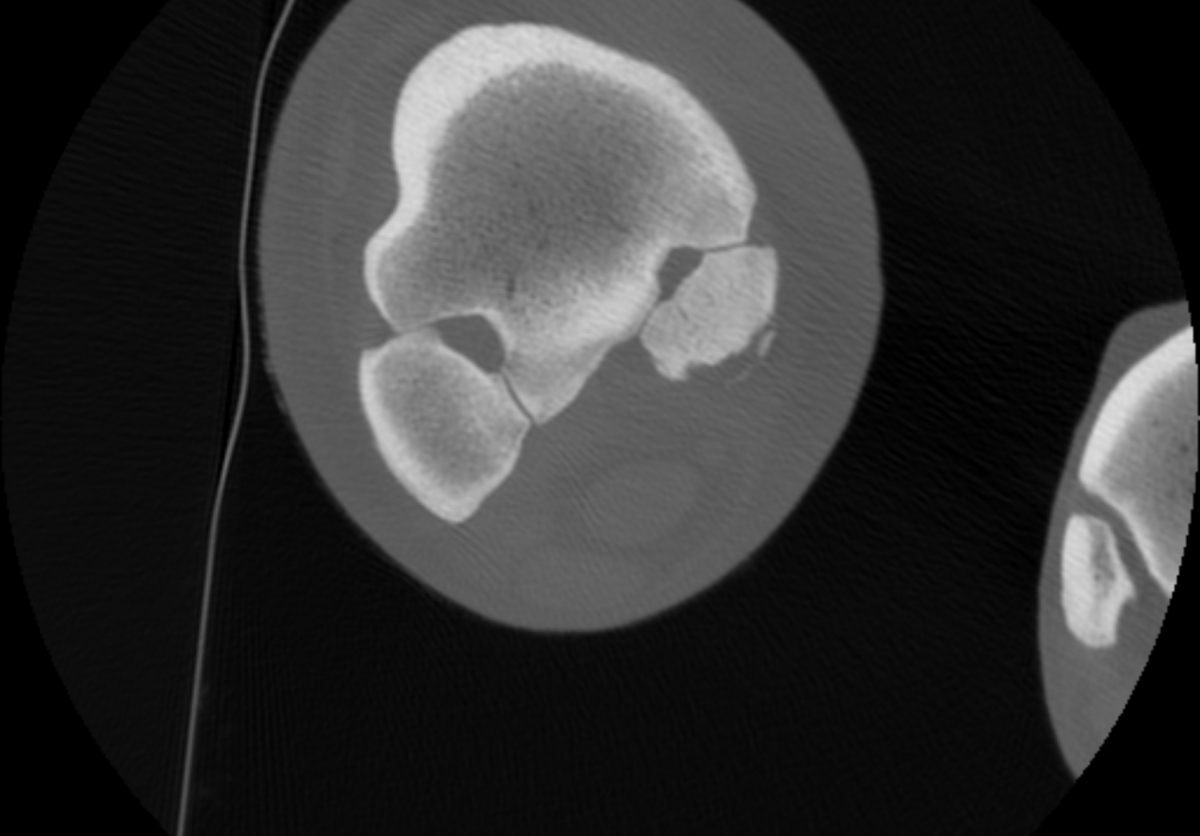
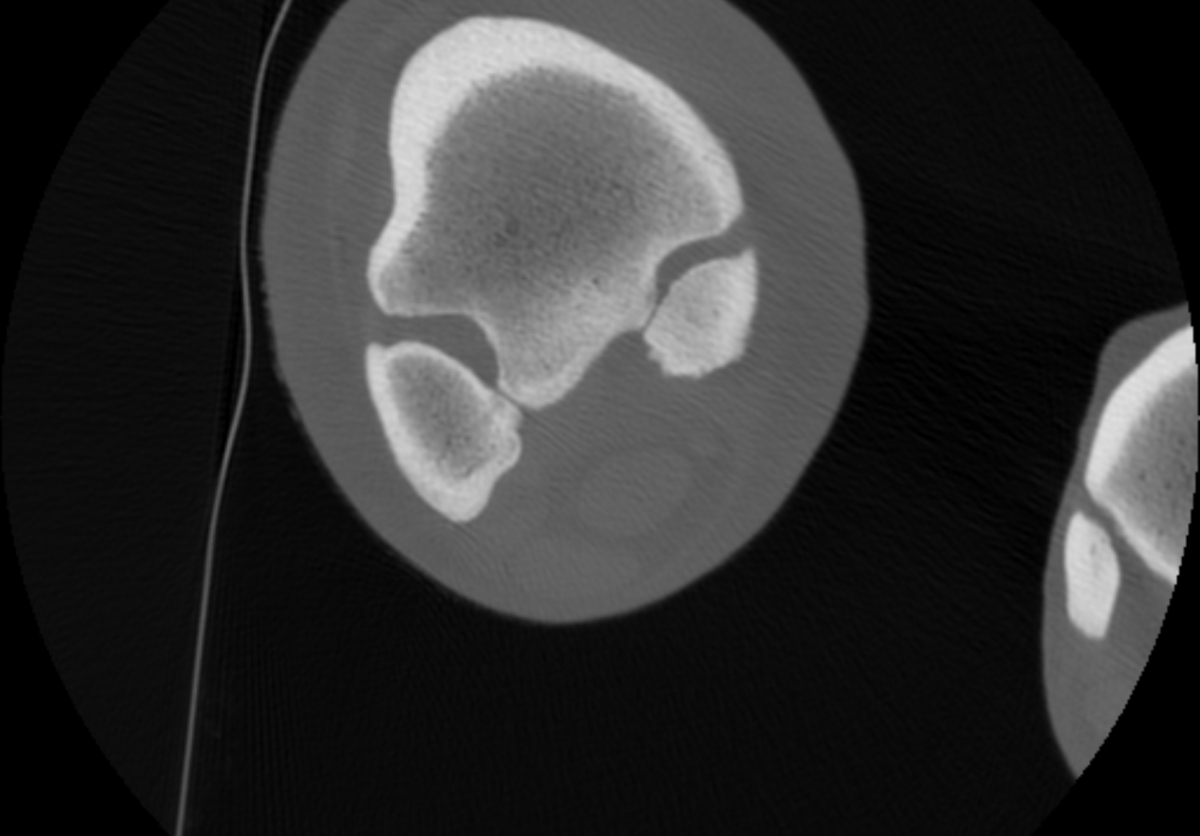
CT – The images are oriented with dorsal at the top and medial on the right side of the image.
1 mm images were acquired from the distal talus through the proximal metatarsus. There is a comminuted fracture of the central tarsal bone with mild displacement and multiple small fragments. An oblique fracture is present through the fused first and second tarsal bone with moderate plantar displacement with focal small surrounding fragments. A small slab fracture is present on the plantar aspect of the fourth tarsal bone with mild plantar displacement. Multiple additional fragments are present on the medial aspect of proximal MT2 and the distal tubercle of the talus. Irregular periosteal reaction is present on the dorsal surface of the distal tibia, lateral surface of the talus and dorsal surface of the central tarsal bone. A cystic structure with surrounding sclerosis is present within the central tarsal bone. There is moderate intracapsular and extracapsular effusion.
Diagnosis
Multiple fractures of the central, fused first and second and fourth tarsal bones
Small fragments of the distal tubercle of the talus and proximomedial aspect of MT2 likely associated with medial long collateral ligament tearing
Periostitis of the tibia, talus and central tarsal bone
Subchondral cyst-like lesion within the central tarsal bone
Moderate intra-and extracapsular joint effusion.
Discussion
In complex joints such as the tarsus, radiographs are limited in the detail they provide because of superimposition. CT is an excellent choice to accurately define the extent and nature of the trauma. In this case, the fractures were much more extensive than evident on the radiographs. The subchondral cyst was also not visible on radiographs, and is of unknown clinical significance.