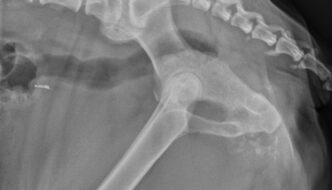
This week’s imaging case is a CT of the skull of an 11 year old Labrador Retriever with a mass. View the case and post your interpretations in the comments sections. CT gives you a great opportunity to review the anatomy of the canine skull. Answers will be available on Monday.

CT image of the skull

Related Articles

Detection of spinal cord compression in dogs with cervical intervertebral disc disease by magnetic resonance imaging.

Vet Rec. 2008 Jul 5;163(1):11-5

Authors: Ryan TM, Platt SR, Llabres-Diaz FJ, McConnell JF, Adams VJ

The medical records and magnetic resonance images of 33 dogs with surgically confirmed Hansen type I cervical intervertebral disc disease were reviewed. Fourteen of the dogs were chondrodystrophic and 19 were not chondrodystrophic. The most common clinical sign was neck pain, which affected 28 of the dogs, and 23 of the dogs were able to walk. Fifteen of the dogs had developed clinical signs acutely, within the previous 24 hours. On cross-sectional images the median area of spinal cord compression was 26 per cent (range 11 to 71 per cent) of the normal spinal cord area. The degree of spinal cord compression was significantly associated with the dogs’ presurgical neurological status but not with their postsurgical neurological status. The dogs with an acute onset of clinical signs had more severe neurological dysfunction before surgery, but their condition improved more as a result of surgery.

PMID: 18603629 [PubMed - in process]

Related Articles

Comparison of magnetic resonance imaging sequences in dogs with multi-focal intracranial disease.

J Small Anim Pract. 2008 Aug 5;

Authors: Cherubini GB, Platt SR, Howson S, Baines E, Brodbelt DC, Dennis R

Objectives: To compare the value of different magnetic resonance sequences in the detection of brain lesions in dogs with multi-focal intracranial neurolocalised lesions and abnormal cisternal cerebrospinal fluid analysis. Methods: T2-weighted, T1-weighted, T1-weighted-Gd, FLAIR (fluid attenuated inversion recovery) images of 73 dogs with multi-focal intracranial localised lesions were reviewed retrospectively. Control dogs (19) were selected on the basis of normal neurological examination, magnetic resonance images and cerebrospinal fluid analysis. Two board-certified radiologists blindly reviewed the magnetic resonance images. Magnetic resonance sequence sensitivities were compared using the chi-squared test and logistic regression, accounting for clustering at the patient level. Statistical significance was set at the 5 per cent level. Results: The FLAIR sequence was found to have the highest sensitivity (84 per cent, 61 of 73), followed by T2-weighted (63 per cent, 46 of 73), T1-weighted postcontrast (62 per cent, 45 of 73) and T1-weighted (23 per cent, 17 of 73) (P<0.001). FLAIR images were 106.1 times (95 per cent confidence interval 25.2 to 447.5) more likely to correctly identify cerebrospinal fluid-positive patients than T1-weighted, 6.4 times (95 per cent confidence interval 2.2 to 18.2) than T1-weighted postcontrast and 5.8 times (95 per cent confidence interval 2.0 to 16.4) than T2-weighted. FLAIR identified 14 per cent of cases that were classified as normal based on the three others sequences. Clinical Significance: Routine use of FLAIR sequence should be encouraged in dogs undergoing a brain magnetic resonance imaging and probably more specifically in cases of suspected inflammatory brain disease.

PMID: 18684139 [PubMed - as supplied by publisher]

Related Articles

The difference of contrast effects of myelography in normal dogs: comparison of iohexol (180 mgI/ml), iohexol (240 mgI/ml) and iotrolan (240 mgI/ml).

J Vet Med Sci. 2008 Jul;70(7):659-63

Authors: Shimizu J, Yamada K, Kishimoto M, Iwasaki T, Miyake Y

The contrast effects of three different contrast media preparations (iohexol 180 mgI/ml, iohexol 240 mgI/ml and iotrolan 240 mgI/ml) in conventional and CT myelography were compared. Three beagle dogs were used and the study employed a cross-over method (total of 9) for each contrast media. The result of CT myelography showed that the contrast effect of iohexol (180 mgI/ml), which had low viscosity, was highest in cranial sites, and the contrast effect of high-viscosity iotrolan (240 mgI/ml) was highest in caudal sites 5 min after injection of the contrast media preparations. This shows that the diffusion of contrast media preparations in the subarachnoid space is influenced by viscosity. The results of conventional myelography also showed that the diffusion of contrast media preparations is influenced by viscosity. Therefore, it is important to identify the location of spinal lesions in veterinary practice, and low viscosity contrast medium preparation with wide spread contrast effects is considered suitable for myelography.

PMID: 18685236 [PubMed - in process]

Related Articles

Association of magnetic resonance imaging findings and histologic diagnosis in dogs with nasal disease: 78 cases (2001-2004).

J Am Vet Med Assoc. 2008 Jun 15;232(12):1844-9

Authors: Miles MS, Dhaliwal RS, Moore MP, Reed AL

OBJECTIVE-To determine whether magnetic resonance imaging (MRI) features correlated with histologic diagnosis in dogs with nasal disease. DESIGN-Retrospective case series. ANIMALS-78 Dogs undergoing MRI for evaluation of nasal disease. PROCEDURES-Medical records and MRI reports of dogs were reviewed to identify MRI features associated with histologic diagnosis. Features evaluated were presence of a mass effect, frontal sinus involvement, sphenoid sinus involvement, maxillary recess involvement, nasopharyngeal infiltration by soft tissue, nasal turbinate destruction, vomer bone lysis, paranasal bone destruction, cribriform plate erosion, and lesion extent (ie, unilateral vs bilateral). RESULTS-33 Dogs had neoplastic disease, 38 had inflammatory rhinitis, and 7 had fungal rhinitis. Lesion extent was not significantly associated with histologic diagnosis. Absence of a mass effect was significantly associated with inflammatory disease. However, presence of a mass was not specific for neoplasia. In dogs with evidence of a mass on magnetic resonance (MR) images, nasal turbinate destruction, frontal sinus invasion, and maxillary recess invasion were not useful in distinguishing neoplastic from nonneoplastic disease, but cribriform plate erosion, vomer bone lysis, paranasal bone destruction, sphenoid sinus invasion, and nasopharyngeal invasion were. CONCLUSIONS AND CLINICAL RELEVANCE-Results suggested that in dogs with nasal disease, the lack of a mass effect on MR images was significantly associated with inflammatory disease. In dogs with a mass effect on MR images, vomer bone lysis, cribriform plate erosion, paranasal bone destruction, sphenoid sinus invasion by a mass, and nasopharyngeal invasion by a mass were significantly associated with a diagnosis of neoplasia.

PMID: 18598154 [PubMed - indexed for MEDLINE]

Related Articles

Clinicopathologic and diagnostic imaging characteristics of systemic aspergillosis in 30 dogs.

J Vet Intern Med. 2008 Jul-Aug;22(4):851-9

Authors: Schultz RM, Johnson EG, Wisner ER, Brown NA, Byrne BA, Sykes JE

BACKGROUND: Systemic aspergillosis is a serious disease of dogs for which the clinical characteristics are poorly described. OBJECTIVE: To describe the clinical and diagnostic imaging characteristics of dogs with systemic aspergillosis. ANIMALS: Thirty dogs with systemic aspergillosis. METHODS: Retrospective case review. Medical records were reviewed for signalment, clinical features, and results of clinicopathologic testing and diagnostic imaging. Diagnosis was confirmed by culture of Aspergillus terreus (n = 13), Aspergillus deflectus (n = 11), or other Aspergillus spp. (n = 6). RESULTS: Compared with the background hospital population, German Shepherd dogs and female dogs were overrepresented (odds ratio [OR] 43, 95% confidence interval [CI] 20-91, P < .0001, and OR 2.9, 95% CI 1.2-6.7, P= .02), respectively, with 20 of the 30 dogs being German Shepherd dogs and 77% (23 of 30) of the dogs being female. The median age was 4.5 years (range 2-8 years). Anemia, leukocytosis, hyperglobulinemia, azotemia, hypercalcemia, and hypoalbuminemia were present in 8, 21, 12, 9, 8, and 6 dogs, respectively. Diskospondylitis, osteomyelitis and thoracic lymphadenomegaly were present in 16, 10, and 5 dogs, respectively. Sonographic findings were enlarged hypoechoic lymph nodes (n = 12), mottled and irregular kidneys with or without masses (n = 12), pyelectasia, and an aggregate of echogenic material in the renal pelvis (n = 9). Thirteen dogs were treated with antifungal drugs, with survival times ranging from 0 to 25 months after diagnosis. CONCLUSIONS AND CLINICAL IMPORTANCE: Systemic aspergillosis typically involves young to middle-age female German Shepherd dogs, and there are characteristic abdominal ultrasound findings with the disease process. Infection with A. deflectus was as common as A. terreus, and in rare cases, long-term survival was associated with antifungal therapy.

PMID: 18647155 [PubMed - in process]

Related Articles

What is your diagnosis? Vesica fellea duplex.

J Am Vet Med Assoc. 2008 Jul 15;233(2):227-8

Authors: Secrest SA, Bailey MQ

PMID: 18627223 [PubMed - indexed for MEDLINE]

Related Articles

Severe reaction to intravenous administration of an ionic iodinated contrast agent in two anesthetized dogs.

J Am Vet Med Assoc. 2008 Jul 15;233(2):274-8

Authors: Pollard RE, Pascoe PJ

CASE DESCRIPTION: Acute severe systemic reactions developed during i.v. administration of an ionic iodinated contrast agent (iothalamate meglumine) in 2 dogs undergoing contrast-enhanced computed tomography. CLINICAL FINDINGS: Both dogs developed marked changes in heart rate and systolic arterial blood pressure during or immediately after i.v. administration of the contrast agent. The first dog became profoundly hypertensive and bradycardic with poor oxygenation, apparent bronchospasm, and prolonged diarrhea. The second dog became hypotensive and tachycardic with erythema on the ventral aspect of the abdomen and pelvic limbs, periocular edema, and diarrhea. TREATMENT AND OUTCOME: Both dogs were treated for shock by means of i.v. fluid administration, and anesthesia was discontinued. The first dog was placed on a ventilator to improve oxygenation but was hypertensive and unresponsive for 6.5 hours following contrast agent administration. Bloody diarrhea persisted once consciousness was regained. The dog was discharged 3 days after contrast agent administration, and diarrhea resolved 15 days later. The second dog responded to phenylephrine administration, but urine output appeared low immediately following recovery from anesthesia. Urine output was normal the following day, and the dog was released 36 hours after contrast administration with no residual adverse effects. CLINICAL RELEVANCE: Findings highlighted the potential risk for severe reactions associated with i.v. administration of ionic iodinated contrast agents in dogs. Both hypertensive and hypotensive responses were seen. Supportive care for systemic manifestations was effective in these 2 dogs, and extended hospitalization was not necessary.

PMID: 18627231 [PubMed - indexed for MEDLINE]

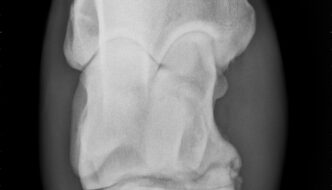
This week’s imaging case comes from large animal radiology. It’s a 2 year old Thoroughbred filly that was kicked on the left tarsus. Post your interpretations in the comments section! Answers will be available on Monday.

Left tarsus

Left tarsus

Related Articles

Association of clinical and magnetic resonance imaging findings with outcome in dogs suspected to have ischemic myelopathy: 50 cases (2000-2006).

J Am Vet Med Assoc. 2008 Jul 1;233(1):129-35

Authors: De Risio L, Adams V, Dennis R, McConnell FJ, Platt SR

OBJECTIVE: To determine whether clinical signs or magnetic resonance imaging findings were associated with outcome in dogs with presumptive ischemic myelopathy. DESIGN: Retrospective case series. ANIMALS: 50 dogs. PROCEDURES: Medical records and magnetic resonance images were reviewed. A neurologic score from 1 (normal) to 5 (most severe degree of dysfunction) was assigned on the basis of neurologic signs at the time of initial examination. Follow-up information was obtained from the medical records and by means of a telephone questionnaire completed by owners and referring veterinarians. RESULTS: Median neurologic score at the time of initial examination was 3 (range, 2 to 5). Median follow-up time was 584 days (range, 4 to 2,090 days). Neurologic score at the time of initial examination and extent of the lesion seen on magnetic resonance images (quantified as the lesion length-to-vertebral length ratio and as the percentage cross-sectional area of the lesion) were significantly associated with outcome. Sensitivity of using a lesion length-to-vertebral length ratio > 2.0 or a percentage cross-sectional area of the lesion > or = 67% to predict an unsuccessful outcome was 100%. CONCLUSIONS AND CLINICAL RELEVANCE: Results suggested that severity of neurologic signs at the time of initial examination and extent of the lesions seen on magnetic resonance images were associated with outcome in dogs with ischemic myelopathy.

PMID: 18593322 [PubMed - indexed for MEDLINE]