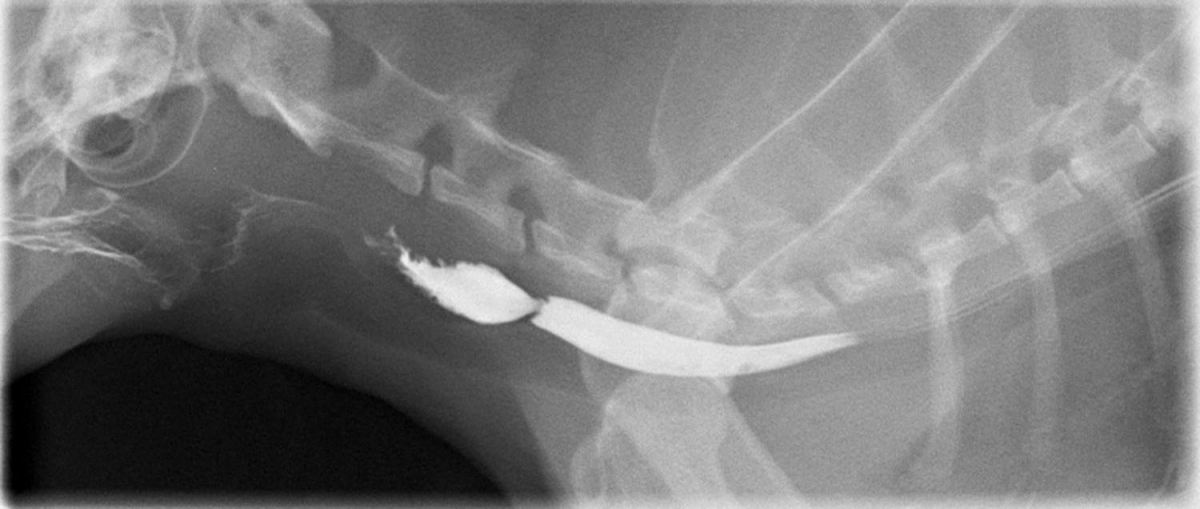
Today’s case is a 10-year-old female neutered Domestic Short Haired cat with a recent onset of regurgitation. She was treated for hemobartonella with doxycycline two weeks ago. Plain radiographs were unremarkable. Fluoroscopy was performed using liquid barium. Looking at this image, what are your findings?
Findings
There was a persistent narrowing in the cranial cervical esophagus which never dilated as the peristaltic bolus passed through it. There was also slowing of the bolus passage at this site.
Diagnosis
Esophageal stricture secondary to doxycycline toxicity.
Discussion
Strictures often cause a chronic partial obstruction of the esophagus. Common causes are gastric reflux under anesthesia, vomiting, foreign bodies and caustic agents. There are reports of doxycycline capsules being retained in the esophagus of cats and causing localized necrosis and eventual scarring with stricture.
Plain radiographs are often normal in these cases, and contrast radiography and fluoroscopy are required. Liquid barium may reveal a stricture with radiography if the timing is correct. Fluoroscopy is ideal to watch the passage of contrast throughout the length of the esophagus. Barium soaked kibble is a good second step after liquid barium, as moderate strictures are often well delineated.