Today’s case is a 10 year old female neutered domestic short haired cat with dehydration, anorexia, and lethargy. Post your interpretations in the comments section.
Teaching and learning about veterinary diagnostic imaging.
Today’s case is a 10 year old female neutered domestic short haired cat with dehydration, anorexia, and lethargy. Post your interpretations in the comments section.
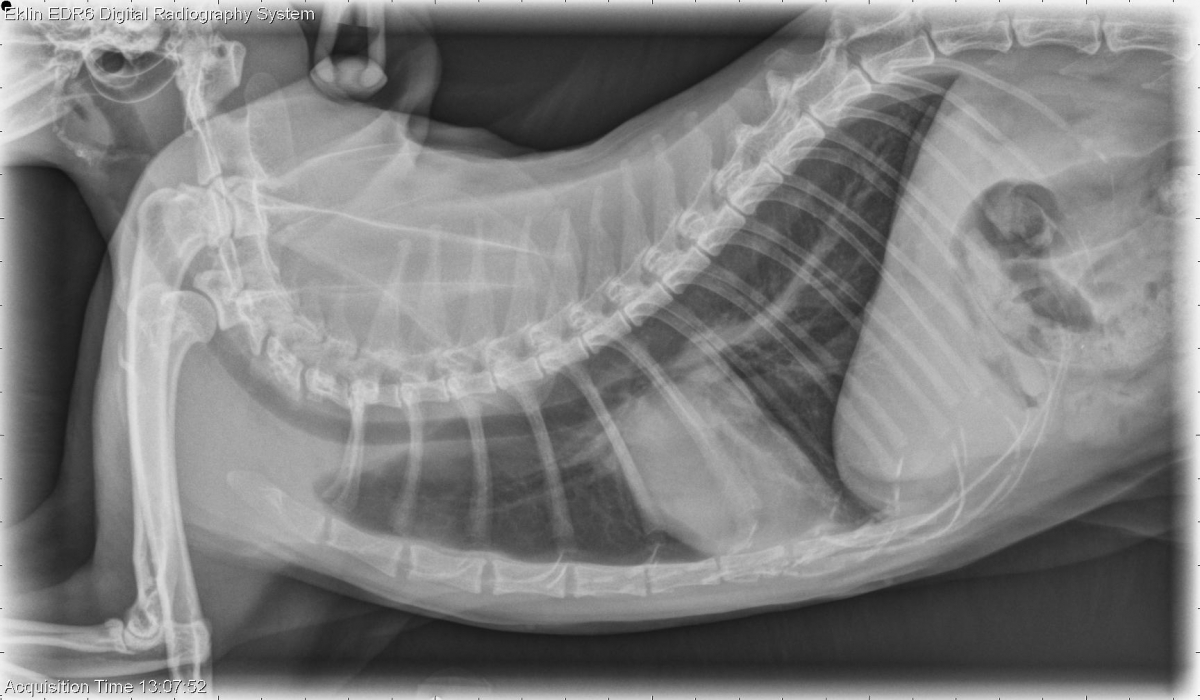
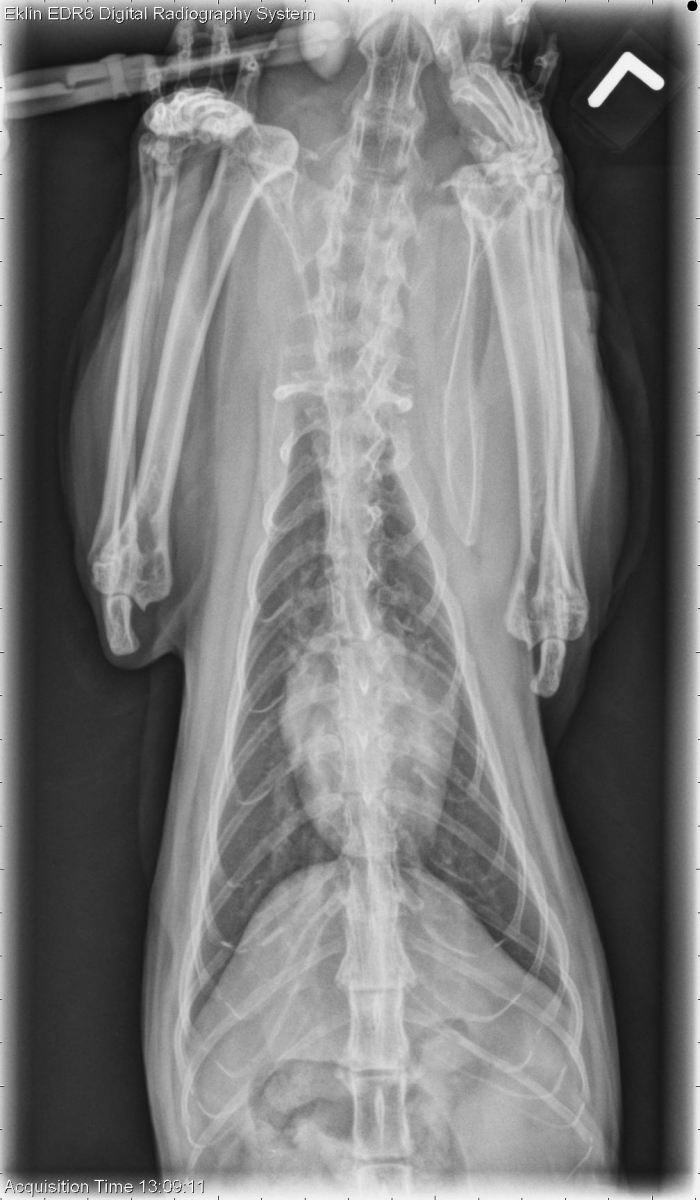
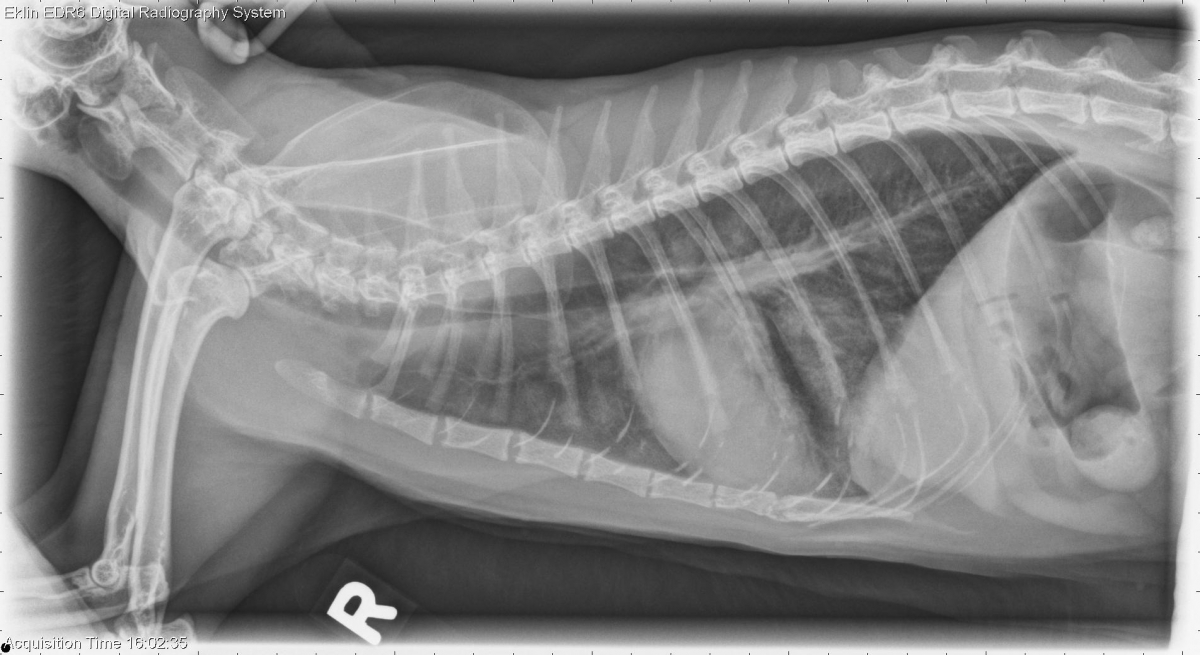
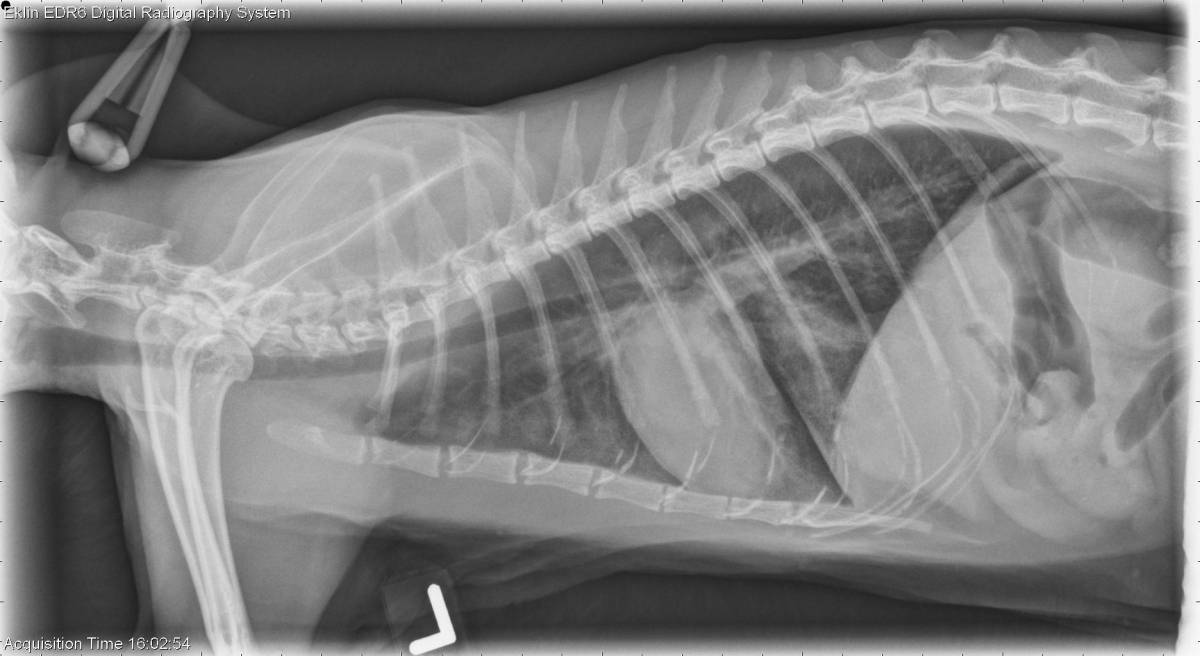
There are interstitial to alveolar infiltrates through the cranial lungs field as well as in the caudal ventral field. The caudal vena cava is obscured by the infiltrates.
On the LL view there is a fissure line caudal to the heart.
On the lateral views the heart looks slightly tall, and the caudal part is straighter than normal- this might indicate left side enlargement.
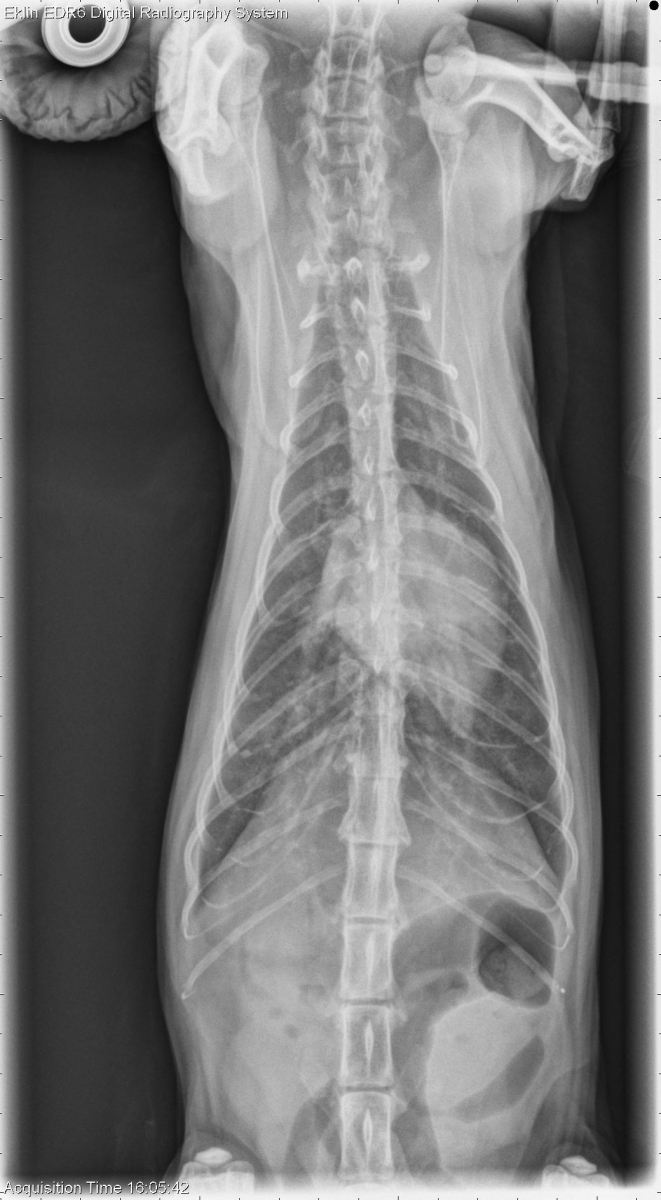
On the VD view the heart apex is shifted to the left. The rad is slightly oblique but there seem to be also a slight mediastinal shift to the left. The pulmonary vessels are prominent on that view. The pulmonary infiltrates are seen also on that view.
I would think congestive heart failure.
Other differentials include pneumonia etc.
Rdx : Bronchiectasis, interstitial and bronchial lung pattern, pulmonary artery dilation
DDx : Chronic bronchitis, pneumonia(bronchopneumonia, PIE, infectious cause), pulmonary hypertension, feline dirofilariasis feline lung worm (Aelurostrongylosis)
Yes, the key here is to identify the interstitial pulmonary pattern, and then to incorporate your other findings into the interpretation.
I think there is an alveolar pattern in the accessory lung lobe as there is a lobar sign at its cranial border and silhouetting of the caudal vena cava. I also think diffuse interstitial and bronchial lung patterns. The pulmonary arteries appear prominent – enlarged and a little tortuous in the cranial thorax.
Considering history I would consider bronchopneumonia (foreign body or abscess in accessory lobe?) with secondary pulmonary hypertension from the chronic lung disease. I think heartworm would also have to be on the list with secondary pneumonitis – although this wouldnt fit as well with a bronchial component. Agreed with above comments that lung parasites should be considered.
I agree with the above comments that the pulmonary arteries are the more prominent component of the prominent pulmonary vessels. And on the VD view the left one is slightly tortuous.
Therefore I agree that pulmonary hypertension is possible.
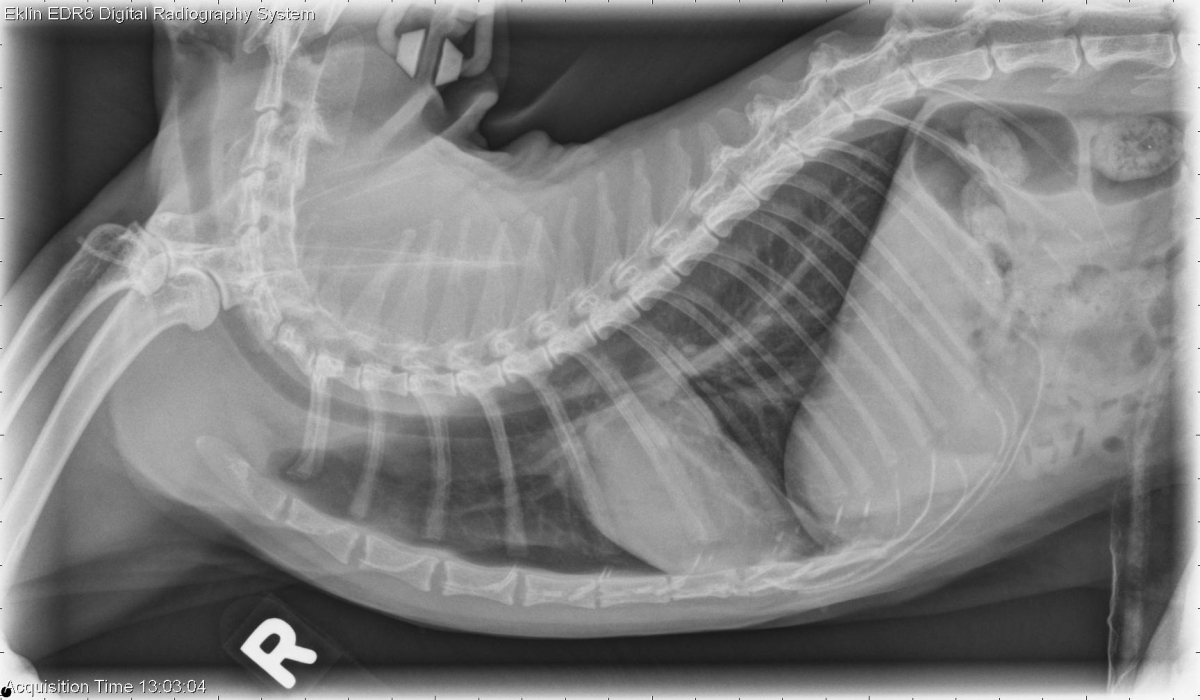
OK, great, everyone saw the patchy interstital to alveolar pulmonary pattern. I think that this increase in opacity can cause the bronchi to look more prominent, but the visible bronchi are few and far between. This cat’s heart is markedly enlarged, taking up about 75% of the width of the thorax on the v/d. It also has a valentine shape. The arteries and veins to the cranial and caudal lung lobes are about the same size, and are upper limits of normal size. Remember that cats in heart failure do not behave like dogs; their pulmonary edema is patchy and not perihilar, and they often have pleural effusion. The answers are now available, click on the link to the case to see follow-up radiographs!
ON right lateral, the diaphragmatic cruri are flattened with the increased distance between heart and cupola. The Abdominal and pleural space are normal. The VHS of heart is approximately 8.4 higher than the reference range. The cranial pulmonary vessels are within normal range but the caudal pulmonary vessels looks a bit larger than normal reference range. Airbronchogram is confirmed on the caudal portion of left cranial lung lobe on right lateral as well as increased soft tissue opacity on the accessory lung lobe, consistent with unstructured interstitial lung pattern.
DDX – cardiomegaly – HCM most likely, as well as other condition.
Pulmonary parenchyma – Peripheral interstitial to alveolar pattern – Cardiogenic edema. pneumonia(less likely)
Question – Aren’t caudal pulmonary vessels are dilated when based on the rule of thumb that caudal pulmonary vein and artery shoudn’t be larger than the witdh of the rib where they cross?
Thanks in advance.
“witdh of the ninth rib”