Posted by: Allison Zwingenberger, in Case of the Day
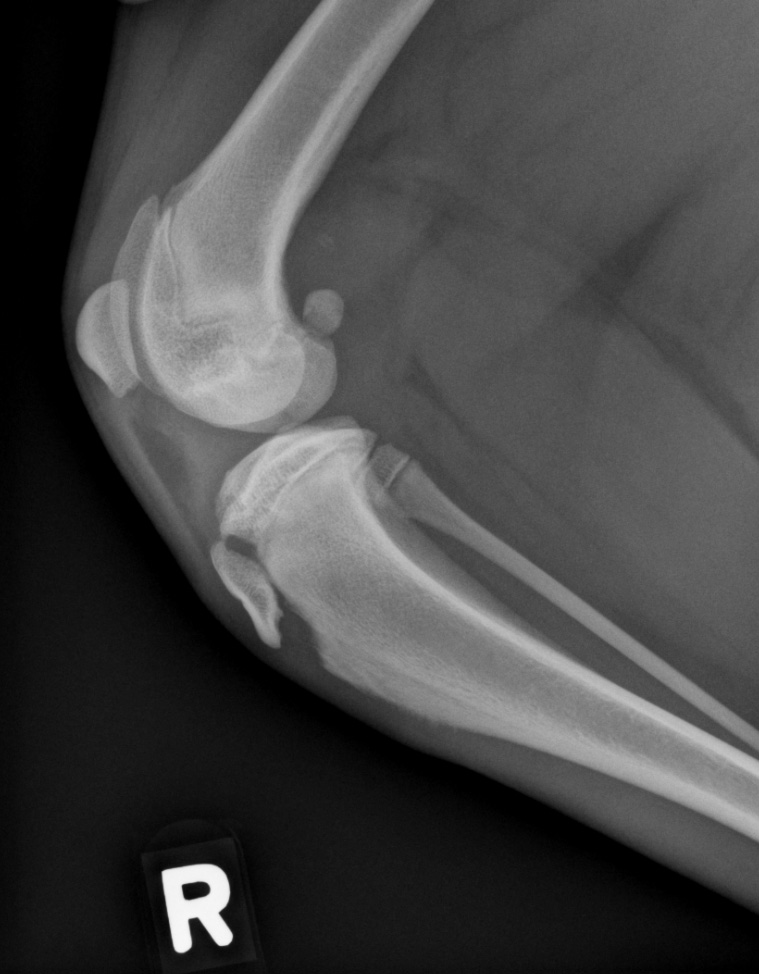
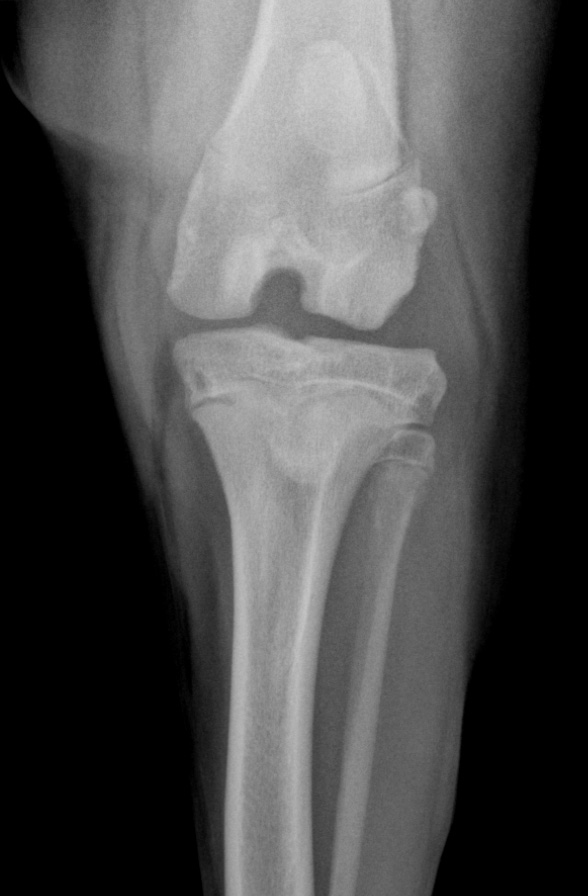
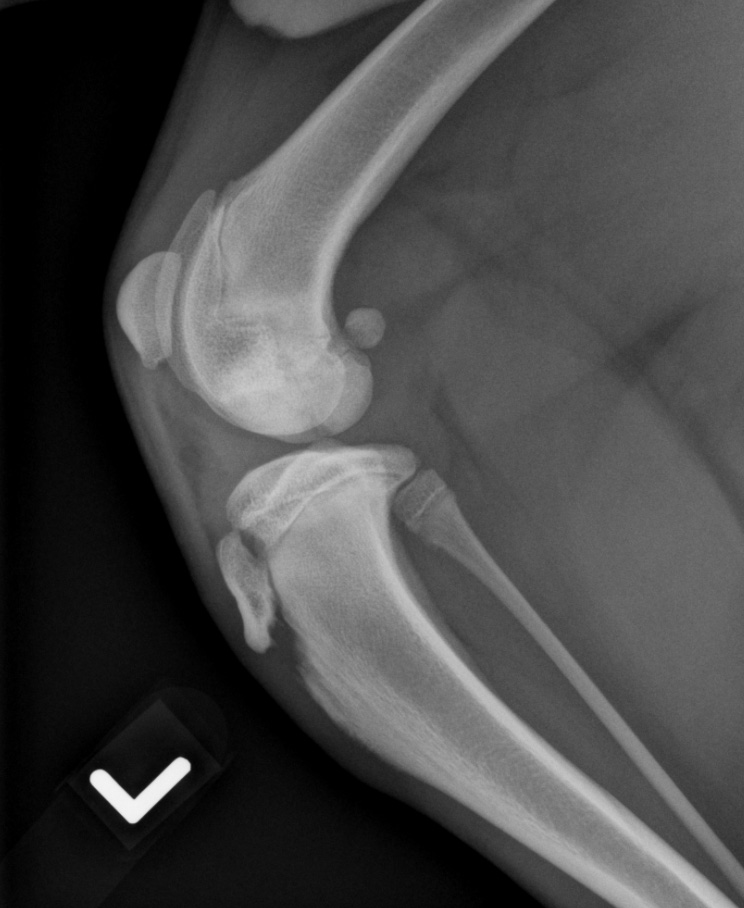
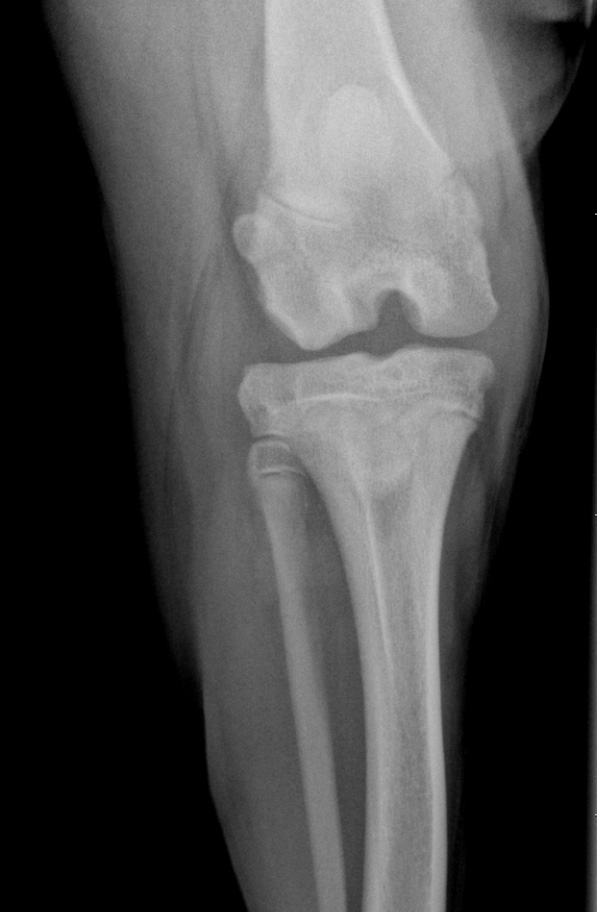
This week’s case is a 9 month old male neutered Boxer with trouble rising. Go straight to the case and see what you think. Test your musculoskeletal interpretation skills by adding to the comments. I’ll reveal the answers early next week.
Related posts:
- 2 year old male neutered Boxer with thoracolumbar pain
- 6 month old male neutered Rottweiler with vomiting
- 5 year old female neutered Husky cross with vomiting
- 9 year old male neutered Labrador Retriever
- 7 year old male neutered cat with abdominal mass
This entry was posted
on Thursday, January 17th, 2008 at 2:10 am and is filed under Case of the Day.
You can follow any responses to this entry through the RSS 2.0 feed.
You can leave a response, or trackback from your own site.
January 18th, 2008 at 12:20 am
I can’t access to this case, but I don’t know why. From the lateral view of the stifle joint.
Rad findings
1. Soft tissue opacity compressing the patella fat pad and displacing fascial planes caudally
2. Radiolucent line between the tibial tuberosity and the proximal tibial epiphysis
3. A radiolucent spot on the femoral lateral (or medial) condylar subchondral bone
Rad Dx
1. joint effusion
2. femoral condylar subchondral erosion
3. Separated or unfused tibial tuberosity from/to the tibial proximal epiphysis
There may be a long list of Dx for joint effusion and subchondral erosion, but when we consider the age of the patient, breed and radiographic Dx. Those two may be strong candidates.
DDx
1. Osteochondrosis of the stifle joint that affects the growth plate of tibial tuberosity (tentative Dx)
2. Avulsion fracture of the tibial tuberosity with osteochondrosis
: less possible because there is no proximal displacement of the tibial tuberosity, although the stifle joint is flexed.
January 18th, 2008 at 2:36 pm
My apologies, I reset the permissions on the case and you should be able to access it now.
January 21st, 2008 at 8:47 am
I’m agree with radiovet74
DDx
- Osgood-Schlatter disease.
- Osteochondrosis of the stifle joint
January 21st, 2008 at 1:17 pm
Nice job! Both of you mentioned avulsion of the tibial tuberosity (aka Osgoode-Schlatter disease) as a differential. The tibial tuberosity always looks separate from the tibia in young dogs. If you suspect a problem, radiograph the other side to compare it with (both are available within this case). Dogs with an avulsion fracture can have proximal displacement of the tuberosity and the patella. In this case the tibial tuberosities are normal. The answer is available now, just follow the link to the case.
January 24th, 2008 at 5:22 am
Good case. There is a case of Osgood Schlatter’s disease (presumed) posted by Bill Blevins on VIN that he followed out over many months. Just run a simple search in VIN and try and find it. We also saw a case presumed Osgood Schlatter-related last year similar to Blevin’s posted case. It is not associated with tibial tuberosity avulsion but rather theorized to represent asceptic necrosis of the tibial tuberosity region from chronic loading. It is self-limiting with rest and symptomatic treatment and not surgical. To date, I don’t think anything has been published in the veterinary literature.